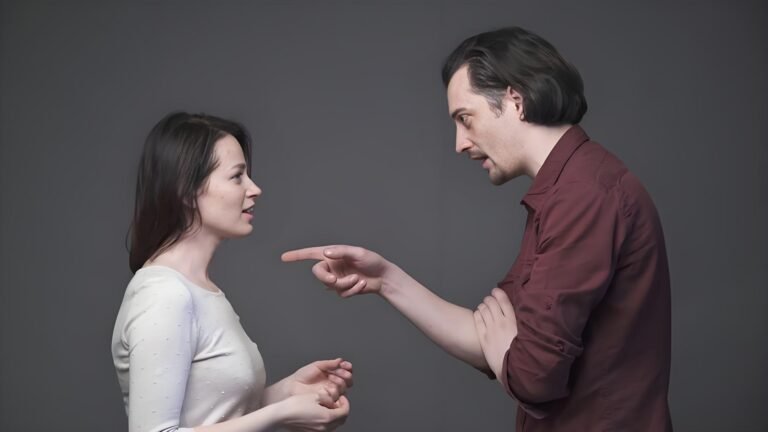
The Most Heartbreaking Behavior In An Intimate Relationship
Insecure Attachment Styles in Intimate Relationships
Do You Know Someone Who Offers “Fake Respect, Real Control”?
You know the type—people who claim to “respect your choices” and “support your decisions,” yet subtly shoot down every option you make. On the surface, they give you freedom; in reality, they won’t tolerate anything that strays from their script.
My ex-boyfriend was exactly like that.
When I finally broke up with him, everyone around me was confused—some even told me I was “failing to appreciate what I had.”
In their eyes, he was the so-called perfect partner: driving me to and from work, treating me to nice dinners, taking me shopping, and on trips.
But only I knew the truth—none of it was real.
When we went shopping for clothes, he’d say, “Buy whatever you like—I’ll pay for it.”
But the moment I picked something I loved, he’d follow up with, “Are you sure that suits you? Looks a bit… off. Here, try this one I chose instead.”

When we ate out, he’d ask what I wanted—only to shoot it down with excuses:
“Didn’t you say you were trying to lose weight? And now you want something this greasy? You’re always giving up halfway.”
And when I pushed back—“It’s just one meal. I really want hot pot today,”—he’d turn it on me:
“Why are you getting emotional with me? I’m only saying this because I care.”
Six years in that relationship left me drained—mentally, emotionally, and physically.
Slowly, I realized: “fake respect” is far more dangerous than outright control.
It hides in plain sight. It’s harder to name, harder to fight—and far more corrosive.
So how do we spot “fake respect, real control”?
What drives people to act this way?
And most importantly—how do we build relationships rooted in genuine respect?

“Fake Respect” Comes from Inner Weakness
People who practice “fake respect, real control” in relationships are, at their core, profoundly insecure. They rely on controlling their partner to generate a sense of safety that they cannot produce within themselves.
This fragility typically stems from three key sources:
1. Insecure Attachment Patterns
Psychology places attachment at the very center of personality development.
Simply put, the way our parents cared for us as children directly shapes how we approach intimacy as adults.
If parents provide consistent love, warmth, and attention, we grow up believing we are worthy of love and capable of healthy connections. This develops into what’s known as secure attachment.
But when parents ignore emotional needs or fail to provide psychological nourishment, a child is more likely to develop insecure attachment.
This makes it difficult to trust others, heightens fear of rejection, and leaves a person living in constant anxiety about being abandoned—making healthy romantic relationships extremely hard to sustain.

2. The Grip of Inner Inferiority
Fang Xiewen, a character from the hit drama The Story of Rose, is a textbook example of a “fake-respect partner.”
His early loss of his father and his mother’s controlling parenting style became the roots of his deep-seated inferiority.
When he meets Huang Yimei—confident, radiant, raised with love and freedom—he is drawn to her light. But her brightness doesn’t heal him; it exposes his shadows.
Rather than working on his own growth, Fang chooses to dim her light. He controls, belittles, and traps her—both emotionally and physically—within the cage he builds.
As Alfred Adler wrote in The Science of Living:
“The more intensely a person feels inferior, the more desperate their pursuit of superiority becomes.”
Extreme inferiority often disguises itself as arrogance—and in relationships, that arrogance quickly mutates into control.
3. Anxiety Fuels Control
Psychology tells us: the greater the uncertainty, the higher the anxiety.
At its core, anxiety is the fear of losing control.
The more anxious someone feels, the tighter they cling to people, outcomes, routines, and narratives.
Anxious individuals work hard to project an image of total control, hoping this performance will mask their inner fragility and calm their racing thoughts.
But this is nothing more than scratching an itch from outside the shoe.
It doesn’t solve the real problem—it only deepens their anxiety and amplifies the suffering of those around them.

So What Does a Truly Mutually Respectful Relationship Look Like?
Respect Matters More Than Love—In Every Kind of Relationship
In truth, this isn’t just about romance. In any relationship, respect matters more than love.
To love someone without respecting them isn’t love—it’s possession.
True respect is, at its core, an act of resisting the “objectification of relationships.”
Relational objectification refers to a dynamic in which one or both parties, driven by their own desires, ignore their own or the other’s feelings, treat people as if they were emotionless objects, and pursue goals in ways that damage well-being, rights, or resources.
Real respect asks us to see each other—fully, clearly—as complete individuals.
It invites us to appreciate and affirm each other’s intrinsic worth, instead of endlessly demanding, correcting, or controlling the other to fit our own blueprint.
As psychologist Dr. Stephen Gilligan puts it:
“The deepest healing comes from genuine respect.”
Only in a relationship rooted in mutual respect can we truly accept ourselves—and, in turn, help heal the other person.

To move toward this kind of relationship, we can begin with three shifts:
1. Clarify Boundaries Between Partners
Many people believe that once you’re in a relationship, there should be no secrets, no walls, no lines drawn—because boundaries supposedly weaken intimacy.
But as writer Su Xin reminds us:
“Human relationships are like two trees growing side by side. Too close, and they crowd and shadow each other, struggling to thrive—even withering. Only when they stand with appropriate space between them can their branches flourish and bloom.”
Even the closest lovers need healthy boundaries.
Without them, you’re silently signaling: “You’re allowed to intrude on me.”
Yet respect and acceptance of each other’s limits are essential parts of love itself.
2. Stop Making Pointless Comparisons
Some couples constantly weigh whose needs are “more important”:
- “My work matters more than your feelings.”
- “Taking care of kids can’t possibly be harder than my job.”
But here’s the truth: pain is not comparable.
There is no universal chart ranking whose exhaustion is heavier or whose effort is nobler.
Wasting energy on these contests only builds hierarchies of “stronger” and “weaker”—and quietly erodes love until there’s nothing left to hold onto.
3. Offer the Help They Actually Need
The heart of partnership lies in showing up in ways that actually support the other person.
For example:
- When they’re unwell, bring them a glass of water or hold them—let them feel your presence.
- Ask, “What can I do so you feel a little better?” instead of saying, “I think you’d be better off doing what I suggest.”
When your care is sincere and tailored to their needs, trust deepens—and the relationship becomes more resilient.

Don’t Suppress How “Fake Respect” Makes You Feel
What If They Simply Can’t—or Won’t—Respect You?
You might be wondering: “What if the other person is incapable of real respect?”
If you find yourself trapped in a “fake respect, real control” dynamic, here are three ways to respond:
1. Help Them See What “Fake Respect” Is—and Why It Hurts
Start by naming your lived experience. Be clear about what’s happening, why it hurts, and what’s at stake.
You can use this simple communication formula:
State your feeling + Explain the pattern + Name the impact.
Example:
- “The way we’ve been interacting lately has left me feeling unseen and controlled.”(feeling)
- “When choices are framed as ‘up to me’ but then picked apart, it feels like control disguised as respect.”(pattern)
- “If this continues, I’m worried our relationship won’t survive.”(impact)
Once you speak this truth, they may feel remorse—or defensiveness. Either way, naming the problem opens the door to change.
Left unspoken, resentment only hardens until repair becomes nearly impossible.

2. Tell Them What Real Respect Looks Like to You
Every couple develops its own rhythm. Even “respect” isn’t one-size-fits-all—it means different things to different people.
Try telling your partner directly what you need:
- Which gestures make you feel trusted and valued
- Which “corrections” or “suggestions” cross a line for you
Clear requests are far easier for someone to hear than an explosion of hurt after months (or years) of silent endurance.
3. If Nothing Changes After Honest Effort, Consider Walking Away
Sometimes “fake respect” comes from ignorance—never having learned healthier ways to love.
But sometimes, it reflects a deeper issue: a fundamentally flawed view of relationships.
If you’ve communicated clearly, repeatedly, and nothing shifts—or worse, they insist they’ve done nothing wrong—it may be time to protect yourself.
Don’t sacrifice your peace, your growth, or your sense of self to keep a relationship alive.
Some exits aren’t failures. They’re acts of self-respect.