
Worse Than PUA! Meet the Emotional “Vampire” — Run While You Still Can
- How To Recognize Narcissistic Traits (NPD) In An Intimate Relationship
- 5 Common Traits of Narcissistic Personality Disorder (NPD)
- Lies as Leverage
- Why Do People Stay with Someone Who Has NPD—Even When It’s So Harmful?
- How To Deal With Narcissistic Traits (NPD) In An Intimate Relationship
How To Recognize Narcissistic Traits (NPD) In An Intimate Relationship
Recently, a friend came to me, overwhelmed and on the verge of collapse:
“My dad is absolutely suffocating. At home, he acts like a king—he thinks he’s always right.
Ever since I was little, my mom and I had to do everything his way. The moment things don’t go his way, he explodes.”
She gave me an example. One morning, she left the house and locked the door as usual. Later, her father came back, couldn’t get the key to turn, and immediately blamed her.
He insisted she must have slammed the door so hard that she broke the lock—stranding the whole family outside.
No matter how hard she tried to explain that she’d closed the door gently, just like any other day, he wouldn’t listen. Their shouting match drew half the neighbors out to watch.
Eventually, they pried the lock open—only to discover that the lock was rusted. That’s why the key wouldn’t turn.
Even though this proved she wasn’t at fault, her father didn’t apologize. Instead, he grew even angrier.
He grabbed a stick and shouted:
“Yeah, I wronged you—so what?!”
“You’re always so careless—it had to be you!”
She was shattered. She couldn’t understand:
“Why can’t he ever admit he’s wrong? Why does he push all the blame onto me?”
The truth is, someone this controlling and self-centered may not simply have a “bad temper.”
They may fit the profile of Narcissistic Personality Disorder (NPD).
NPD is far more common than most people realize. Many who have lived with or loved someone with NPD say it’s even more devastating than “PUA” (emotional manipulation).
Its effects are especially severe in families of origin and intimate relationships, where the bonds are hardest to cut.
Those on the receiving end often want to resist—or leave—yet feel trapped by loyalty, guilt, or hope that things will change.
So, how to recognize NPD in an intimate relationship
What can we do when we encounter it?
Is it possible to deal with narcissistic traits in an intimate relationship?
And perhaps most importantly, can a life damaged by narcissistic abuse be rebuilt?
Today, we’re going to talk about one of the most hidden yet destructive forces in relationships:
Narcissistic Personality Disorder (NPD).

5 Common Traits of Narcissistic Personality Disorder (NPD)
Why Is It So Painful to Be Around Someone with NPD?
Because a person with Narcissistic Personality Disorder does not care about your feelings.
Their goal is not connection—it is extraction: to drain your emotional energy, devalue your worth, and bend you to their will.
In one Douban support group, survivors often refer to themselves as “blood packs” (xuè bāo)—living reservoirs of emotional fuel for the narcissist to “feed” on.
Of course, diagnosing NPD requires professional clinical assessment.
But drawing from psychological research and the DSM-5, certain patterns strongly suggest narcissistic traits—and should raise immediate red flags.
1. Extreme Self-Centeredness & a Sense of Absolute Authority
According to the Narcissism Spectrum Model (Krizan & Herlache, 2018), the defining feature of NPD is the belief that one’s own needs carry absolute priority over everyone else’s.
People with NPD often see themselves as the “ruler” of their world—superior, entitled, and deserving of special treatment.
Others exist to serve, accommodate, and obey.
Example:
If they ask someone to pick up their food delivery and the person says they’re busy, the narcissist’s response might be:
- “Since when are you busier than me?”
- “Is your stuff really more important than my stuff?”
- “What’s the big deal? Just do it!”
Deep down, their operating belief is:
“Everyone should serve me. My needs always come first.”

2. Refusal to Admit Fault or Imperfection
In the narcissist’s mind, they are flawless.
Evidence, logic, or reality rarely shake this conviction. No matter how clearly they’ve erred, they will not admit it.
When their mistakes are pointed out:
- They often explode—shouting, raging, intimidating—trying to crush the other person into submission.
- Then they shift the blame, using phrases like:
- “If you hadn’t ___, I wouldn’t have ___.”
- “This is your fault. You made me do this.”
⚠️ Important survival tip:
Never try to “prove your innocence” to an NPD.
The moment you defend yourself, you’ve stepped into their trap—the self-defense trap.
No amount of evidence will earn you an apology. Only more exhaustion—and more harm.
3. Profound Lack of Empathy
Most people with NPD are incapable of genuine empathy.
They don’t just overlook your pain—they don’t register it as real.
To them, other people are not fully human; they are instruments to be used, managed, or discarded.
Recall the story I shared earlier:
After being unfairly scolded, my friend cried, hoping—just once—for comfort.
Instead, her father snapped:
- “What’s there to cry about? I hate seeing you cry! Cry again, and I’ll hit you!”
She once whispered to me, heartbroken:
“Am I even his biological child? How can a parent hate their kid this much?”
But in the narcissist’s world, no one else is a main character.
You, your feelings, your pain—all of it is background noise to their self-importance.
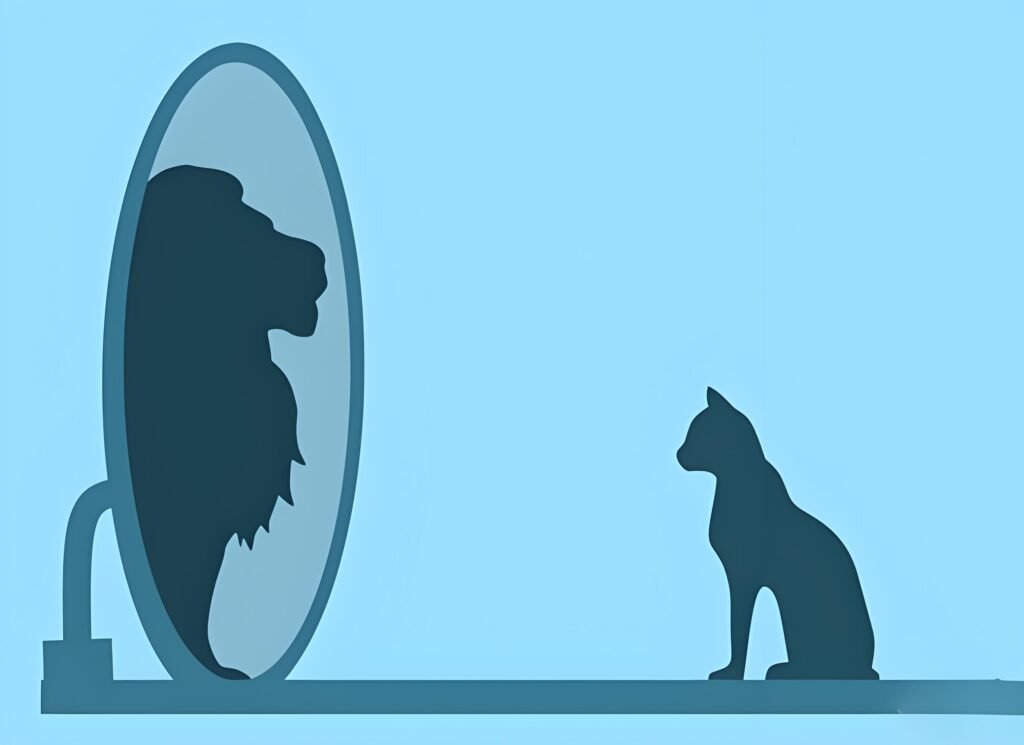
4. An Extreme Need for Praise and Attention: Feeding on “Narcissistic Supply”
People with NPD require a constant stream of Narcissistic Supply—external validation, admiration, and attention—to prop up their fragile self-esteem.
They often exaggerate their achievements or talents, fishing for compliments and recognition to keep their internal “fuel tank” full.
If you fail to admire them—or worse, ignore them—they may perceive this as betrayal, reacting with rage, passive-aggression, or calculated revenge.
Though they ceaselessly extract emotional energy from others, they rarely refuel anyone in return.
A colleague named Cai Cai, who once dated a man with NPD traits, described it this way:
“He dumped all his complaints on me—I was basically his emotional trash can. But the moment I tried to share my struggles, he never comforted me. He just said I was ‘stupid’ for letting it happen.”
After a few months, Cai Cai felt completely hollowed out. Her optimism vanished. Her confidence disappeared.
She barely recognized herself.
Interestingly, a small subset of narcissists will offer help or gifts—but only with strings attached. They keep score obsessively, expecting multiplied repayment in gratitude, loyalty, or submission.
Their “kindness” is really a transaction—one where you always owe them more.
5. Demanding Perfection from Others: Constant Criticism and Devaluation
Because narcissists view themselves as flawless, they extend this impossible standard to those closest to them—partners, children, and family members.
To an NPD, your imperfections aren’t just disappointments—they’re embarrassments. You’ve tarnished their perfect image.
They expect:
- A partner who is endlessly understanding, attractive, and accomplished
- Children who are obedient, brilliant, and a source of pride
- Anyone close to them acts as a flawless extension of themselves
When you inevitably fall short, the response is swift: criticism, belittling, and outright degradation.
Lies as Leverage
NPD individuals often use strategic dishonesty to manufacture shame.
They invent stories of “perfect others” to hold up as mirrors to your failure.
One former client shared this haunting memory:
“My mother used to tell me about a relative’s daughter who earned 7,500 yuan a month—and gave 7,000 back to her parents.
‘Look how capable and filial she is,’ my mother would say.
Compared to her, I felt worthless.”
Consumed by guilt, this woman worked herself to exhaustion for years—desperate to give her mother more, to finally measure up.
Only later did she discover the truth:
Neither the relative nor the daughter existed.
Her mother had fabricated the entire story.
Even more devastating, she realized her childhood had been built on a foundation of similar lies—each one designed to manipulate, control, and extract.

Why Do People Stay with Someone Who Has NPD—Even When It’s So Harmful?
By now, many readers may be wondering:
If people with NPD are so selfish, cold, and difficult—why do others still fall in love with them?
If they’re so toxic, why is it so hard to leave?
The reasons often come down to the following five dynamics—most of which operate beneath conscious awareness.
1. NPDs Are Highly Skilled at Masking
NPD traits can be learned and performed.
Even without genuine empathy, a narcissist can mimic warmth, concern, and “normal” social behavior so convincingly that others see them as charming, kind, or even exceptionally caring.
This “mask of sanity” rarely slips during casual interaction.
It’s only after entering a close, long-term relationship—when defenses drop, and daily life intertwines—that the true self begins to surface.
In the early stages, detection is extremely difficult.
What looks like love is often calculated impression management.
2. NPDs Excel at Crafting a False Persona
Narcissists don’t waste energy on just anyone.
They deliberately target people they perceive as high-value: emotionally generous, successful, empathetic, or socially desirable.
To lure their target, they deploy an irresistible persona:
- Overflowing enthusiasm
- Confidence bordering on charisma
- Intense, almost “too-good-to-be-true” displays of affection
To the recipient, it feels like love at first sight—or the long-awaited arrival of “the one.”
Trust is granted quickly. The bond deepens fast.
But the moment the narcissist decides the person is no longer useful—or no longer feeding their ego—they discard them abruptly.
This is why so many survivors describe a “cliff-edge breakup” or “sudden divorce”: one day everything seemed fine; the next, they were gone.
3. The “Self-Verification Trap” Set by the NPD
When that sudden discard happens, the victim’s first reaction is often:
“Was it something I did? Did I mess up somehow?”
Driven by confusion and hope, they begin to reflect, apologize, and prove their worth, desperately trying to restore the relationship.
But here’s the cruel twist:
The narcissist does not want a resolution.
They enjoy your frantic self-verification—because it proves how much power they have over you.
Your pain feeds their ego. Your begging confirms their superiority.
The more you are devalued, the harder you try to prove yourself.
The harder you try, the more trapped you become.
This creates a self-reinforcing loop that can last months—or years.

4. Falling Into the Bottomless Pit of “Sunk Costs”
Some victims do see through the narcissist’s true nature when the discard happens.
But what traps them isn’t ignorance—it’s investment. Years of emotional labor, financial support, sacrificed dreams, and compromised boundaries create massive sunk costs. And with that comes a dangerous mindset: “I need to get my return on this.”
The thoughts become:
“Why should I be the one thrown away?”
“After everything I gave, how dare they do this to me?”
That burning sense of unfairness makes walking away almost impossible. Instead of cutting their losses, the victim doubles down—desperate to “win,” to balance the scales, to make the narcissist finally value them. But in NPD dynamics, there is no winning. Only deeper depletion.
5. Developing a “Dependency” on the NPD
After prolonged exposure to a narcissist’s emotional highs and lows, the victim’s nervous system adapts. Their baseline for stimulation becomes abnormally high.
Ordinary calm no longer feels “normal”—it feels empty, even unsettling. This creates a paradoxical effect:
When the relationship ends, the silence isn’t peaceful—it’s unnerving.
Some survivors actually miss the chaos, mistaking adrenaline for passion.
On top of that, living under constant stress leaves the victim emotionally bankrupt. They’re exhausted, depleted, running on fumes.
In that weakened state, they crave support—something solid to lean on. If no healthier alternatives are available, the narcissist starts looking like the only option again. After all, they did have “normal” moments. They could be charming, attentive, even loving—for a while. So the victim crawls back. And the cycle restarts.

How To Deal With Narcissistic Traits (NPD) In An Intimate Relationship
It is important to emphasize that the purpose of this article is not to demonize people with NPD.
Beneath the grandiose facade lies a core of profound inferiority.
Many individuals with NPD are survivors of childhood trauma themselves—wounds that were never acknowledged or healed.
Their relentless need for external validation isn’t born from strength, but from a crippling lack of security and a fragmented sense of self. They depend on others for “narcissistic supply” simply because they cannot generate self-worth from within.
However—and this is crucial—while we can understand the origins of their behavior on a clinical level, understanding does not equal absolution.
If you ask the “survivors” who have endured the abuse, none would argue that the narcissist deserves their sympathy.
Compassion for the wounded child within the narcissist should never come at the cost of ignoring the devastation inflicted upon those around them.
So, what should we do if we encounter someone with NPD in our lives, or even get hurt by them?
Here are a few suggestions. I hope you’ll take care of yourself.
1. Trust Your Inner Experience—and Strengthen Your Boundaries
As mentioned earlier, narcissists can be intensely attentive and “caring” before a relationship fully takes root.
During this stage, look closely:
Are their actions genuinely focused on your wellbeing—or are they reciting empty scripts with no substance behind them?
Phrases like:
“Remember to eat.”
“Don’t stay late at work.”
“Get some rest.”
…may sound thoughtful, but ask yourself: Do their actions match their words?
This isn’t about becoming paranoid.
It’s about staying aware, moving slowly, and making important decisions only after consistent, trustworthy behavior is demonstrated—not after charm alone.
2. Distance Yourself If at All Possible
NPD is deeply entrenched and rarely changes through love, logic, or persuasion.
If being around this person leaves you feeling small, invisible, or repeatedly hurt—even after honest conversations—believe the pattern, not the potential.
When you can, choose physical distance.
Removing yourself from the environment is the clearest, safest way to protect your peace.
3. If You Can’t Leave Yet, Practice “Strategic Indifference”
Sometimes, circumstances (marriage, family ties, caregiving) make immediate separation impossible.
In these cases, the safest approach is often low-contact or “Gray Rock” behavior:
- Be polite, but uninteresting.
- Offer no emotional reactions—no anger, no defensiveness, no deep sharing.
- Keep interactions brief, factual, and boring.
Paradoxically, when you stop providing “narcissistic supply,” many NPD individuals will eventually lose interest and drift away.
More importantly, redirect your attention back to yourself.
Ask: If this person didn’t exist, what would I want to do?
Then start building that life—quietly, steadily, on your own terms.
4. After Leaving, Reconnect With—and Accept—Yourself
Healing begins with acceptance:
Accept what happened. Accept that the past cannot be changed.
And accept that you are allowed to choose a different future.
In many ways, the narcissist acts as a mirror—reflecting old wounds, unmet needs, and unconscious patterns you may have carried for years.
That painful experience can become an opening:
A chance to know yourself more deeply and begin genuine self-repair.
5. Rebuild Your Sense of Self-Worth
Being with an NPD is often a slow erosion of confidence.
Over time, you may have internalized their voice—believing you were “too sensitive,” “not enough,” or “the problem.”
Leaving is only the first step.
The real work is rebuilding your inner foundation:
- Notice your strengths.
- Make choices based on your needs, not theirs.
- Surround yourself with people who see and respect your humanity.
Becoming the fullest, freest version of yourself is the most powerful response of all.
Not as “revenge”—but as liberation.
“When you are finally whole and independent, the narcissist becomes irrelevant—just another person you used to know.”

Can a Person with NPD Save Themselves?
In theory, treatment exists.
In practice, the chances are very slim.
Most individuals with Narcissistic Personality Disorder genuinely believe others are the problem—never the flawed, “imperfect” self.
Admitting fault would threaten the very self-image they’ve built their life around.
That’s why most therapists report:
True NPD patients rarely walk through the door voluntarily.
The people who show up in therapy are usually the partners, children, or family members trying to survive the relationship.
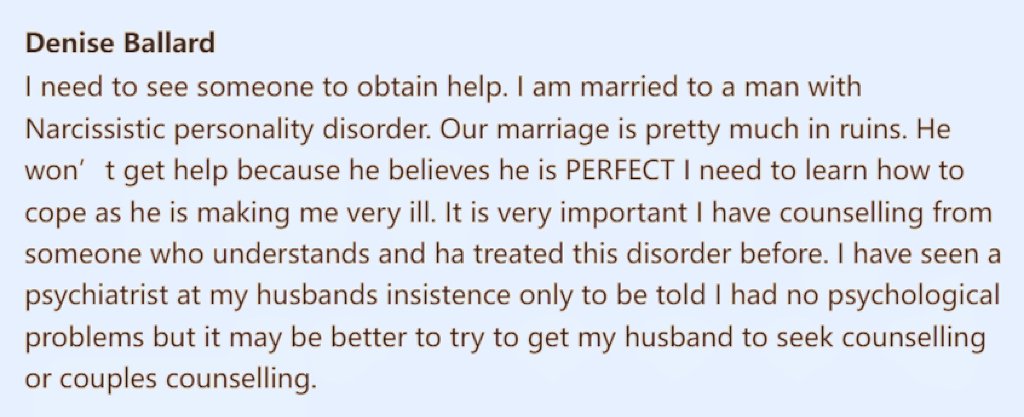
Online support communities abroad are filled with stories like this one—from a woman married to a man with NPD:
“Our marriage has been almost destructive. He’ll never seek help—because in his mind, he’s perfect.
He actually insisted Iwas the one with the problem, and made me go see a doctor.
The evaluation came back completely normal—I have no mental health issues.
Now I’m here because I need to learn how to deal with him.
He’s suffocating me. I’m in so much pain…”
For someone whose wife has NPD and wants to save the relationship
My wife definitely has NPD. I hope our relationship can continue, but I’m afraid it might not.
Obviously, I don’t dare to blame all the unhappiness in the marriage on this issue of hers. Do you have any advice?

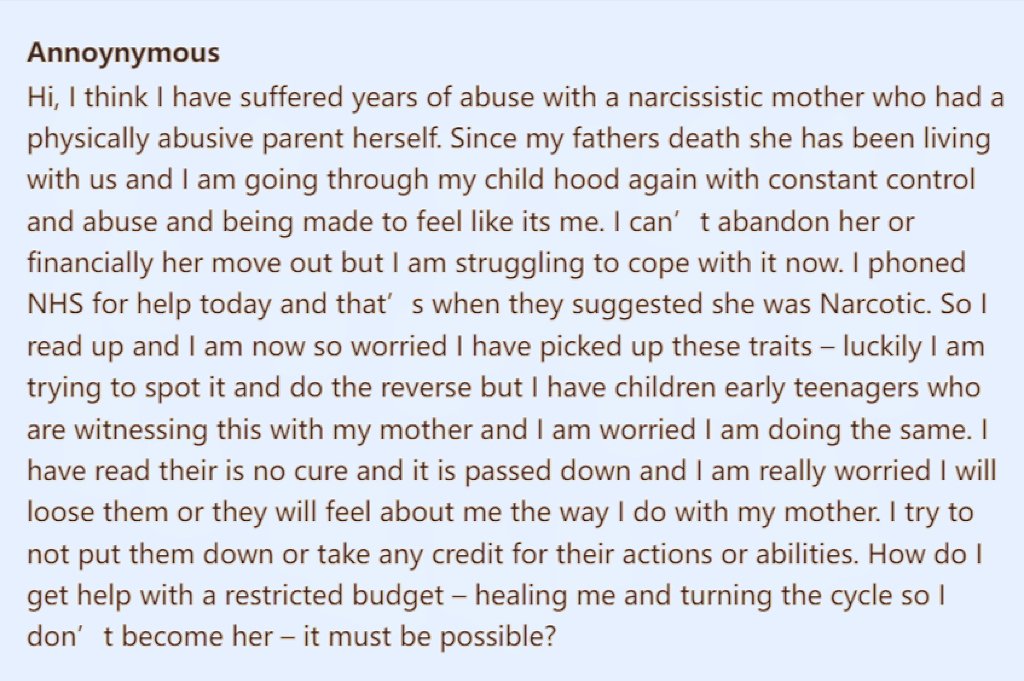
I have a mother with narcissistic personality disorder (NPD) and am afraid of inheriting it.
I think I’ve been abused by a narcissistic mother for many years. She herself was abused by her own mother.
I can’t abandon her, but I’m now struggling to cope. Now I’m very worried that I might also develop these traits—I’m fortunately aware of this and doing the opposite.
How can I get help—cure myself, break this vicious cycle, so that I don’t become like her?
Nevertheless, NPD can be prevented before the situation becomes more severe.
If you notice some symptoms of NPD and people around you have also expressed discomfort, you might consider seeking professional help for diagnosis and treatment.