Why People Who Always Feel Stuck Need a Combat Sport
Do you know someone like this: in relationships, they instinctively give ground; in conflict, they habitually fall silent; when it comes to voicing their own needs, they always find reasons for the other person first?
Maybe they don’t even like this version of themselves. But before they can open their mouth, the body has already reacted first — shrinking back, avoiding, freezing up.
The other day, I met up with a friend I hadn’t seen in a long time. She used to be exactly this kind of person: lacking in confidence, endlessly considerate of others, and constantly blaming herself for being passive and cowardly.
But the person standing in front of me now radiated a sense of strength. She spoke and moved with ease and composure, and she was far more willing to express what she needed. I couldn’t help but wonder what had changed her so much.
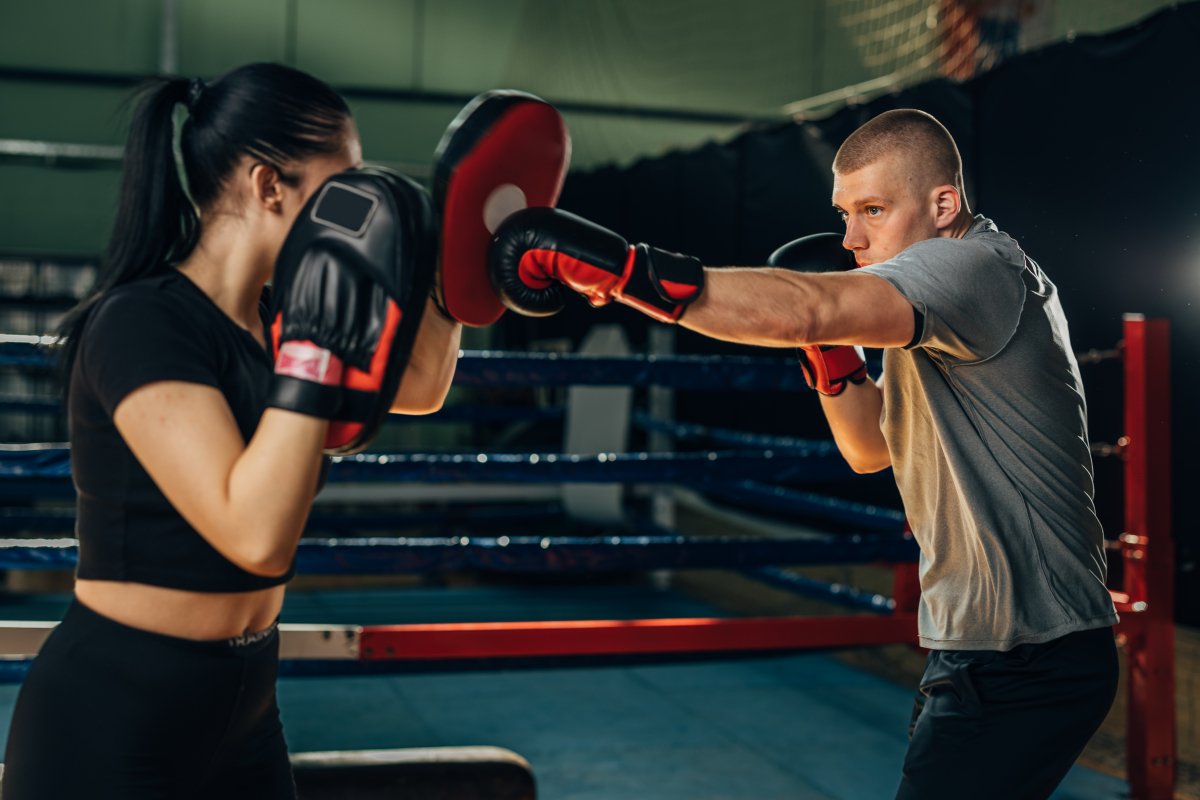
Then she began telling us about her experience training in boxing — a combat sport. She said she started just to blow off steam, but gradually she noticed her body growing stronger, and that strength slowly seeped into her personality.
She started daring to express herself, even daring to go after opportunities she’d never have dreamed of reaching for before.
That’s when it struck me: some changes don’t begin with “figuring it out.” They begin with the body learning, first, not to flinch.
For anyone who sees themselves as weak, passive, and perpetually unlucky, taking up a combat sport isn’t just physical training — it may become a crucial breakthrough point that changes their life. Today, Kelly is going to talk with you about exactly that.

Why do people who feel stuck need a combat sport?
A combat sport is one centered on physical confrontation, requiring participants to actively respond to, defend against, or strike back at an opponent, competing for advantage — points, position, territory — within a set of rules. It includes high-intensity disciplines like boxing and jiu-jitsu, as well as lighter, more strategic games like badminton and table tennis.
Its benefits go beyond the physical. Through physiological stimulation, it can reshape psychological cognition, change character, and nourish the inner self. That is what sets it apart from ordinary exercise.
Why is it especially suited to passive, soft-natured people? Because in daily life, such people tend to avoid arguments, hate creating conflict, and are unused to expressing dissent. When the body grows accustomed to retreating, that passive pattern quietly steers the course of a life — and, without our noticing, we miss out on happiness that was rightfully ours.
1. The more you give in, the more others push their luck
Psychology has a term for this: disempowerment.
It doesn’t mean you’ve literally lost some position or power. It means that, within relationships, you gradually lose the ability to assert yourself and come to accept, by default, that you can be ignored, dismissed, or sidelined.
For example: at work, the less you dare to refuse extra tasks, the more easily you become the person everyone “just assigns things to.” Among friends, the less you dare voice a differing opinion, the more easily you’re overlooked. In intimate relationships, the more carefully you tread and the less you set boundaries, the more the other person will test you and press forward, step by step.
When you constantly prioritize other people’s feelings and needs and habitually shrink back, your body language broadcasts a lack of confidence. You’re sending a signal to the world: my boundaries can be crossed without consequence.
Over time, others get used to your concessions and start treating your space as theirs to occupy, because “being rude to you costs nothing.”
Combat sports teach you the exact opposite: my boundaries are not up for violation. They force you to defend your own “territory,” to express your real needs, and in doing so, to feel your own worth.
2. Give away everything good, and you’ll start to believe you don’t deserve it
When someone habitually yields, the brain quietly helps them find a reasonable explanation: I’m not as good as others, so it should go to them. I don’t deserve the good things.
Over time, this thought hardens into what we might call a “sense of undeservingness.”
The humanistic psychologist Carl Rogers pointed out that people tend to accept only those experiences that fit their existing self-concept. In other words, if someone deeply believes they are “unworthy of love” or “don’t deserve success,” then even when an opportunity truly arrives, they may instinctively dodge it at the critical moment.
We often see people who are one step from success make a mistake at the very last moment and wreck things without realizing it. They don’t actually want to fail. It’s that having something good feels too unfamiliar — so unfamiliar it makes them anxious and unsettled.
That anxiety and panic are, at root, the clash between the “good thing” in front of them and the “I don’t deserve it” belief inside them. To ease that inner contradiction, they unconsciously push the opportunity away and return reality to the comfort zone that isn’t great but is at least familiar.
Because they’ve never had the real experience of actively fighting for something, the body gradually forms an automatic response: when anything happens, retreat.
In a combat sport, every time you face an incoming attack, you experience something different: you can’t retreat anymore. You must respond with your body. And winning isn’t luck — it’s confirmation of your own strength.

Healthy combat sports can help us reclaim our power
1. Getting used to being seen, rather than used to hiding
Nothing terrifies a passive, timid person more than being looked at. When someone’s eyes land on them, the first impulse is to look away, lower the head, turn around, hide the face. It’s an instinctive bodily response — using avoidance to signal submission.
But in a combat sport, you can’t hide. You have to look your opponent in the eye and read their movements to respond precisely. This trains the brain’s eye-contact stability.
When you can hold your opponent’s gaze without flinching, your nervous system is learning a new logic: being seen doesn’t mean being destroyed. It’s the beginning of being respected.
2. Breaking the illusion that “conflict = the end of the relationship”
For chronically passive people, the brain reflexively treats conflict as danger: if conflict happens, the relationship will break, and I’ll be abandoned. So when facing interpersonal friction, their bodies instinctively choose retreat, silence, avoidance.
Combat sports work like a desensitization experiment for the brain. In the boxing gym or on the court, opponents rush at you; balls or fists come flying at your face. You can’t run. You can only step in and hit back.
In that moment, your brain gradually learns something: I feel pressure, but I am not destroyed. Repeated physical experiences like this slowly lower the brain’s fear threshold around conflict.
And much of the fear of conflict comes from worrying that once you speak up, the relationship will end. But in combat sports, you discover that two people can beat each other fiercely on the mat, then smile, touch gloves, and part on good terms. That experience — going through conflict and keeping the relationship intact — gradually dismantles the illusion that “conflict means the relationship is over.”
3. Strengthening the belief “I have power”
A person appears cowardly not because they truly lack strength, but because that strength has been suppressed for so long that even they have forgotten it exists.
Combat sports provide a safe simulated environment to experience this: facing an opponent, you can exert force, attack, defend — even win.
The moment your fist lands on the pads, or you shove an opponent back, your body sends the brain a clear signal: I am powerful. I can change how things turn out.
That sense of self-efficacy isn’t built from other people’s praise. It’s something the body feels for real.
After a month or two, those moments of power settle into the body’s memory. When your body learns to use strength, your mind grows stronger and more resilient along with it.
4. Seeing aggression for what it is, and letting go of the fear of “becoming bad”
Passive, timid people often carry a hidden fear: if I fight back, will I turn into the kind of person I hate? Will I become someone who bullies others?
That fear usually comes from having rarely witnessed “healthy aggression.” In their experience, aggression means harm, violence, loss of control. So they’d rather endure than strike.
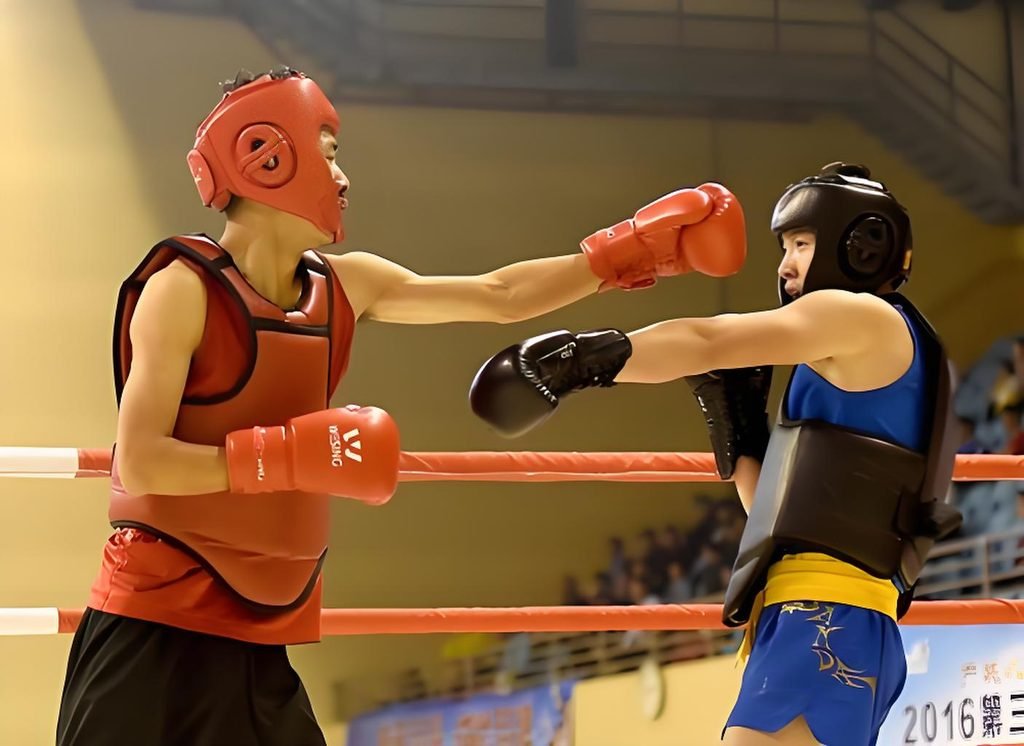
Combat sports help you relearn a distinction: aggression and harm are not the same thing.
When you defend, hold your position, or counterattack, you discover the other person isn’t as fragile as you imagined. They may be pushed back; they may fall. But they get up steady again — just like you.
Healthy aggression exists to protect your territory and defend your boundaries. It’s a sign of vitality.
And here’s the paradox: once you truly have power, it becomes easier to be kind. Because you’re no longer afraid of being bullied, you don’t have to stay tense all the time. Because you trust you can hold your boundaries, you can afford to be gentle.
So don’t worry that one act of pushing back will turn you into a bad person. You’re simply protecting yourself — and that’s a right everyone should have.
Four steps to make trying a combat sport easier to stick with
Which raises the question: throwing yourself straight into a fierce combat sport is bound to feel intimidating. If you’re ready to try, follow these four steps and take it slowly.
Step 1: Start with “low-threat” confrontation and build up gradually
You don’t have to force yourself to be brave right away. Allow your body to adapt slowly.
Combat sports aren’t only boxing, jiu-jitsu, and sanda. There are plenty of gentler entry points.
Badminton and table tennis, for instance, are all about rallying back and forth and outmaneuvering each other. Basketball and volleyball emphasize holding position and fighting for space. Basic training in fencing or taekwondo emphasizes body control rather than attack, letting you experience the force of confrontation within a safe range.
What all of these have in common: you must respond to the other person, not avoid them. For someone used to giving way, that alone is an important psychological exercise.
Step 2: Put your attention on physical sensations, not on how well you’re performing
Many passive people can’t get started because, before they even step onto the court, they’re already worrying: “Will I look clumsy?” “Will others think I’m terrible?”
If that sounds like you, try shifting your attention from “how am I doing?” to “what is my body experiencing right now?”
When I swing, is my arm actually generating power? When that ball comes at me, am I standing steady? In that last collision, was my body tense or stable?
When you pull your attention back to real physical sensations, the anxiety tends to ease on its own.

Step 3: Choose a safe environment with rules and feedback
To change yourself through combat sports, pick a setting with rules, protection, and a coach or partner who gives you feedback.
Rules and protection mean that conflict is permitted, not dangerous. Whether you’re defending or counterattacking, both sides are safe. It’s nowhere near as scary as you imagine.
And having a coach or partner there helps you feel this: after you show your strength, people are still there, responding to you, guiding you, encouraging you. When the match ends, everyone hugs, high-fives, and agrees to meet again next time.
Slowly, your brain builds a new belief: showing your strength won’t destroy a relationship — it will make it clearer and more real.
Step 4: The most important change is allowing yourself to take up space
When you return a ball, block an attack, or hold your ground, your brain receives a signal it may never have received before: when someone comes at me, I don’t have to back down.
That unfamiliar experience of not retreating will gradually rewrite your automatic response in relationships.
One day you may notice: when your rights are infringed on, you don’t cave so easily. When you voice a different opinion, you’re not so tense. In relationships, you’re better able to hold your boundaries.
Because you finally believe it: I really do have strength. I can meet this world head-on.
In closing
Of course, personality doesn’t change overnight.
Often, a person’s passive, timid traits are survival strategies they’ve habitually used to protect themselves. Back then, only by making yourself small could you buy peace in a relationship; could you dodge a storm you didn’t think you could weather.
It’s just that, slowly, you’ve come to realize this strategy no longer works. You keep backing up — until there’s nowhere left to back up to.
So now, you can try letting your body “wake up” first.
Go work up a sweat. Go meet that ball coming at you. Go throw that punch.
Combat sport after combat sport, you’ll grow new flesh and blood — until you meet a version of yourself that is strong, brave, and real.