What Kind of Partner Is Actually Worth Marrying

You’ve probably seen this line circulating online: “To be loved is to be unjudged. In the vast playground of life, they want you to be free, to play, to be happy.”
Yet the comments are often filled with doubt:
“But shouldn’t mistakes be corrected?”
“Isn’t unconditional tolerance just… enabling?”
Here lies the misunderstanding:
Many people confuse “pointing out a problem” with “passing judgment.”
For example:
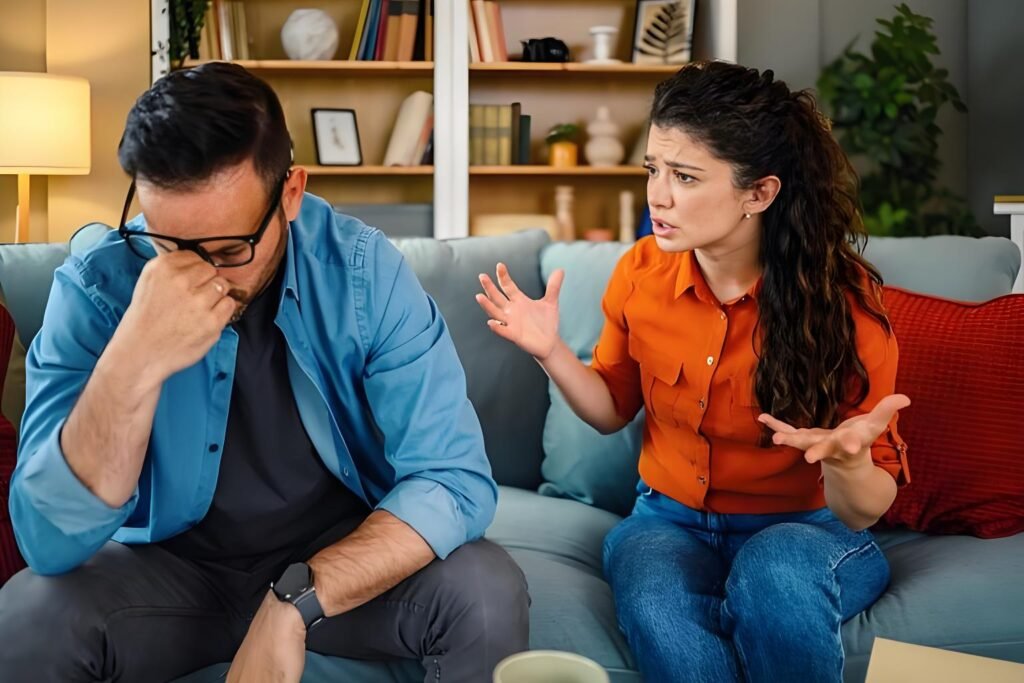
- You’ve had a rough day at work and turn to your partner for comfort—but their first response is criticism and lecturing.
- You open up about a flaw or a moment of vulnerability, hoping for care, but they seize the chance to tear you down.
- You excitedly share an idea, looking for resonance—only to be met with: “That’s unrealistic. You’re not being practical.”
You’re supposed to be each other’s safest person—and yet, around them, you find yourself holding your breath, carefully measuring every word and action, terrified of saying or doing the “wrong” thing.
So, What Does “Unjudged Love” Actually Look Like?
Humanistic psychologist Carl Rogers introduced a foundational concept: Unconditional Positive Regard.
It means:
True love is rooted in the wholesale acceptance of who you are, not in approval of what you door how well you perform.
The precondition for genuine understanding and acceptance is non-judgment.
A partner with unconditional positive regard doesn’t withdraw love when you fail, when you’re vulnerable, when you make mistakes, or when you’re “less than perfect.”
Instead, they make you feel that your existence alone is worthy of love.
Which brings us back to the question:
What kind of partner is truly worth marrying?
Simply put: Watch whether they keep putting you on trial.
But Why Do Some People Judge Their Partners Relentlessly?
And what traits define those who don’t?
Most importantly, if you find yourselves stuck in a dynamic of constant judgment, how can that pattern change?
Why Do Some People Constantly Judge Their Partners?
In intimate relationships, judgment rarely appears as an obvious attack.
More often, it hides behind the disguise of “I’m only saying this for your own good.”
You can spot this subtle “judgment pattern” by watching for three key signs:
1. Absolutist Blame Disguised as Feedback
The other person takes a specific behavior and globalizes it into a character flaw:
- “You always mess things up.”
- “You never think of anyone but yourself.”
This isn’t about the incident—it’s a strike against who you are.
2. Chronic Power Imbalance
One person permanently occupies the role of “corrector” or “teacher,”
while the other is left constantly defending, explaining, or apologizing.
Over time, you feel that nothing you do counts unless it earns their approval or permission.
Your autonomy quietly shrinks.
3. Lack of Emotional Validation—Replaced by “Logic”
When you express hurt or fear, they don’t meet your feelings.
Instead, they intellectualize or minimize:
- “You’re too sensitive. It’s not a big deal.”
- “You’re overreacting. Let me explain why you’re wrong.”
As Nonviolent Communication warns:
Violence often wears the mask of “advice.”
What looks like guidance may actually be a covert moral judgment.
The Deeper Mechanism: Projective Identification
From a psychodynamic perspective, chronic judgment often conceals a defense called Projective Identification, first described by Melanie Klein.
It works like this:
When someone cannot tolerate or accept certain parts of themselves—vulnerability, dependency, selfishness, incompetence—they unconsciously project those disowned parts onto their partner.
Then, they relate to the partner as if the partner embodies those unwanted traits—and try to control, correct, or suppress them.
In simpler terms:
Much of what gets judged in you is what they cannot bear to see in themselves.
Examples:
- An inwardly insecure person criticizes the partner for “not being impressive enough.”
- Someone terrified of losing control demands the partner follow rigid plans “for stability.”
- A person who denies their own needs accuses the partner of being “selfish” for having any.
What Judgment Really Is
The “fault-finding” isn’t really about you.
It’s an avoidance of inner conflict.
By negating you, they temporarily shore up their own fragile self-image:
“See? I’m the reasonable/righteous/correct one—not the weak or flawed one.”
But when judgment saturates a relationship:
- One partner fights back → endless power struggles erode love.
- Or one partner self-censors → true self goes underground, intimacy dies.
Either way, two people grow further apart.

Partners Who Rarely Judge Usually Share 3 Rare and Precious Qualities
People who habitually “judge” their partners are, in essence, imposing their own will under the guise of love.
But real love has never been about forcing you to become “what I want.”
It is about respecting you for exactly who you are.
In a truly “non-judgmental” relationship, partners tend to embody three precious qualities.
The first is:
1. Strong “Containment” Capacity: Seeing and Holding Emotions
Containment refers to the ability to receive, hold, and make sense of another person’s emotional states—without collapsing, withdrawing, or rushing to “fix.”
A partner with containment is like a stable emotional vessel.
They can sit with your anger, your fragility, your chaos—and still remain present.
This creates the deepest form of safety: You don’t have to be “fine” to be loved.
When problems arise, they prioritize seeing and empathizing with your emotions over judging your behavior.
What they offer may not be a perfect solution, but an unshakable psychological space—one where all your anxiety and uncertainty can be held, contained, and gradually dissolved.
2. Respecting and Cherishing Your Partner’s Independence
In a healthy relationship, both people clearly understand: “We” is made up of two whole and separate “I”s.
A partner like this never treats you as an extension of themselves.
Instead, they look at you through the eyes of love—seeing a complete, unique human being.
To love someone isn’t to mold them into who you want them to be.
It is to love them as they already are, in their own way.
This kind of love isn’t about sacrifice, nor is it about clinging.
It is about two independent souls walking side by side.
As psychologist Erich Fromm observed:
“Mature love is union under the condition of preserving one’s individuality and integrity.”

3. A Stable Core: Secure Enough Not to Be Threatened by Your Success
A person with a stable and fulfilled inner world does not need to judge or belittle their partner to feel valuable or superior.
Instead, they meet your growth with encouragement, support, and genuine delight.
Like Xiao Lin, who never felt ashamed that Liu Xiaoyang—a rural woman—was out in the world making a name for herself.
He proudly told everyone, “Liu Xiaoyang is my pride. She’s extraordinary.”
When a TV program wanted to interview her, he didn’t hold her back—he urged her to go, sincerely wishing for her to be seen by more people.
It is this deep internal stability that allows them to love without resentment, to celebrate without envy, and to champion your becoming.
Their strength gives you permission to be confident—and to become, freely and fully, your best self.