
Obsessive-Compulsive Disorder: The Intrusive Tyranny of the Mind
Obsessive-Compulsive Disorder (OCD) is often misrepresented in popular culture as a quirky desire for tidiness or a penchant for organizing books by color. In reality, OCD is a chronic and often debilitating mental health condition characterized by a vicious cycle of intrusive thoughts and repetitive behaviors. Far from being a personality trait, Obsessive-Compulsive Disorder(OCD) is a neurobiological disorder that traps individuals in a loop of doubt and ritual, causing immense distress and interfering significantly with daily life. Affecting approximately 2-3% of the global population, it is one of the leading causes of disability worldwide. Understanding OCD requires looking past the stereotypes to see the internal chaos of a mind at war with itself.
Defining the Core Components: Obsessions and Compulsions
To grasp the nature of Obsessive-Compulsive Disorder(OCD), one must distinguish between its two main pillars: obsessions and compulsions.
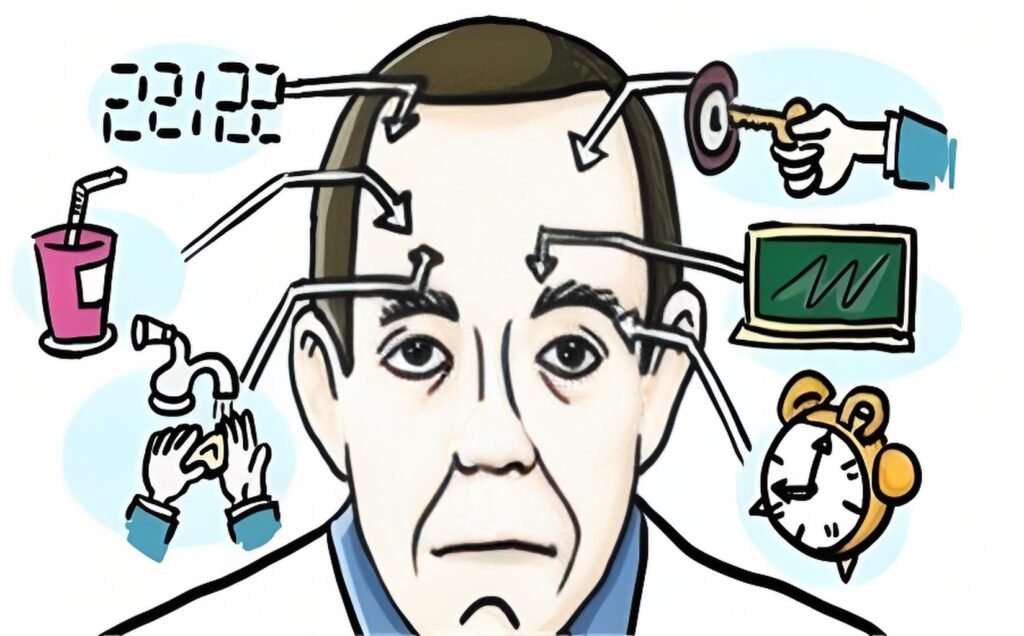
- Obsessions are recurrent, persistent, and unwanted thoughts, urges, or images that are experienced as intrusive and cause marked anxiety or distress. These are not simply worries about real-life problems; they are irrational and egodystonic, meaning they are inconsistent with the person’s true values and desires. Common themes include fears of contamination, fears of harming oneself or others, unwanted sexual or religious thoughts, and an overwhelming need for symmetry or exactness.
- Compulsions (also known as rituals) are repetitive behaviors (like hand washing, checking, or ordering) or mental acts (like praying, counting, or repeating words silently) that the individual feels driven to perform in response to an obsession. The goal of these actions is to prevent or reduce anxiety or prevent some dreaded event. However, these behaviors are either excessive or not realistically connected to the problem they are meant to neutralize.

The Vicious Cycle: How Obsessive-Compulsive Disorder Operates
Obsessive-Compulsive Disorder(OCD) operates like a faulty alarm system in the brain. It begins with an intrusive thought (the obsession)—for example, “I touched a doorknob, and now I have germs.” This thought triggers intense anxiety. To turn off this alarm, the brain demands a neutralizing action (the compulsion)—”If I wash my hands for exactly two minutes, I will be safe.” The compulsion provides temporary relief, reinforcing the belief that the ritual was necessary to prevent disaster. However, this relief is short-lived. The obsession inevitably returns, and the cycle repeats, often growing stronger over time. This cycle consumes hours of a person’s day, eroding their ability to function at work, school, or home.
Subtypes and Presentations
While Obsessive-Compulsive Disorder manifests uniquely in each individual, clinicians often identify common symptom dimensions or subtypes:
- Contamination/Washing: Fear of germs, illness, or environmental contaminants leading to excessive cleaning.
- Doubting/Checking: Persistent doubt that one has caused harm (e.g., leaving the stove on, hitting a pedestrian while driving), leading to repetitive checking behaviors.
- Symmetry/Ordering: The need for things to be “just right,” often involving arranging objects until they feel perfect.
- Forbidden Thoughts: Intrusive thoughts of a violent, sexual, or blasphemous nature that conflict with the person’s moral character, often leading to mental rituals or avoidance.
- Hoarding: Difficulty discarding possessions regardless of their value, distinct from Hoarding Disorder but often comorbid.
Etiology: Why Does Obsessive-Compulsive Disorder Happen?
The exact cause of Obsessive-Compulsive Disorder(OCD) remains unknown, but research points to a combination of genetic, neurological, behavioral, cognitive, and environmental factors.
- Neurobiology: Brain imaging studies have identified dysfunction in the cortico-striato-thalamo-cortical (CSTC) circuitry. This circuit is involved in filtering thoughts and impulses. In OCD, this “mental filter” appears to be broken, allowing unwanted thoughts to break through. Imbalances in neurotransmitters, particularly serotonin, are also implicated.
- Genetics: Obsessive-Compulsive Disorder(OCD) tends to run in families, suggesting a hereditary component, though no single “OCD gene” has been identified.
- Environmental Factors: The onset of OCD can be triggered by stressful life events, pregnancy (Peripartum OCD), or infections. Notably, Pediatric Autoimmune Neuropsychiatric Disorders Associated with Streptococcal Infections (PANDAS) can trigger sudden-onset OCD symptoms in children.
Treatment: Breaking the Cycle
Effective treatments for Obsessive-Compulsive Disorder exist, offering hope for recovery.
- Psychotherapy: The gold standard is Exposure and Response Prevention (ERP), a specific type of Cognitive Behavioral Therapy (CBT). In ERP, patients are gradually exposed to situations that trigger their obsessions (e.g., touching a dirty floor) while being prevented from performing their compulsions (e.g., washing hands). Over time, the brain learns that the feared outcome does not occur and that anxiety naturally decreases on its own.
- Medication: Selective Serotonin Reuptake Inhibitors (SSRIs) are commonly prescribed to help regulate serotonin levels in the brain. Higher doses are typically required for OCD than for depression.
- Neuromodulation: For treatment-resistant cases, procedures like Deep Brain Stimulation (DBS) or Transcranial Magnetic Stimulation (TMS) may be considered to modulate activity in the CSTC circuits.
Living with Obsessive-Compulsive Disorder: Beyond the Diagnosis
Living with Obsessive-Compulsive Disorder(OCD) is exhausting. Sufferers often hide their symptoms due to shame or fear of being misunderstood. However, with proper diagnosis and treatment, individuals can manage their symptoms and lead fulfilling lives. Awareness is crucial—not just for reducing stigma, but for helping people recognize the difference between being “detail-oriented” and having a disorder that requires medical attention. OCD is not a choice, nor is it a character flaw; it is a medical condition that deserves compassion and evidence-based care.