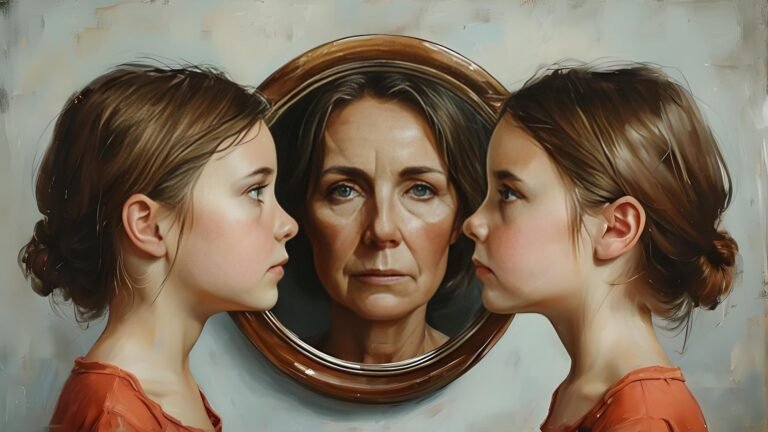
Life Advice: Don’t Lose Yourself In A Relationship
1. “I Just Wanted a Friend”: Lily’s Story
My friend Lily met a guy — let’s call him A — at a birthday party. They worked in similar fields and hit it off immediately, so Lily took the initiative and added him on WeChat.
What followed was relentless. Over the next few days, A flooded her with messages. When she got busy with work and forgot to reply, he would keep pressing her: Why aren’t you answering me? He even went through mutual friends to announce, entirely on his own, that the two of them were “together,” and asked those friends to help him get in touch with her.
Unable to take the message bombardment any longer, Lily finally told him outright that they were just ordinary friends. That set him off completely. He decided Lily had been playing with him — “If you weren’t interested, why did you add me in the first place? Since when do men and women have pure friendships?” And when he noticed Lily had liked another mutual male friend’s post, he concluded she must have moved on to someone new, then went around complaining about her to a whole circle of mutual friends.
It caused Lily real distress. “I just wanted to make a friend. How did it unilaterally turn into us dating?”
What A is displaying is a textbook case of what’s known in Chinese internet slang as the romantic-relationship mindset. To someone caught in it, a relationship with someone of the opposite sex has only two possible states: “a prospect” or “not a prospect.” Romance becomes the only way they can imagine relating to another gender. They become fixated on the pursuit of love and blind to every other kind of connection that might have been built.
If we let this mindset take us over, our thinking narrows, our social world shrinks, and life forfeits a great deal of its richness and possibility.
So today I want to talk about the romantic-relationship mindset — something more damaging than simple lovesickness, and far harder to notice. I hope we can all find a healthier way of looking at how the sexes relate. Don’t treat the “partner” relationship as the most important one — let alone the only one. You’ll live a freer life.

2. Is Love Worth Throwing Everything Away For?
Strictly speaking, the romantic-relationship mindset isn’t a formal psychological term. It’s an internet coinage. In social media and pop culture, it describes a pattern of thinking in which human relationships are viewed almost entirely through the lens of romantic possibility or sexual attraction.
It generally shows up in three typical ways.
2.1 Romance as Life’s Organizing Principle
Every word, action, and thought gets filtered through marriage and dating. Meeting someone of the opposite sex for the first time, they run an instant — often unconscious — assessment: could this person become a partner? And once they’re interacting, everything gets routed back to romance:
- They kept talking to me today — does that mean they like me?
- They’re not my type, so there’s nothing to talk about. No point staying in touch.
2.2 Romance Above Everything Else
They treat romance as supreme and are fiercely exclusive about every other relationship. Family ties, friendships, and all other social bonds can be discarded for the sake of a romantic one.
Social media is full of the joke: once a friend starts dating or gets married, you’ve effectively lost them. There’s the friend who, after marrying, cuts off all contact with friends of the opposite sex — quits the gaming group, deletes contacts, declines every normal dinner invitation. Their world shrinks to one person, their partner, and no one else.
2.3 Reading Romance Into Everything
They habitually view ordinary human interaction through a romantic lens. Any contact involving the opposite sex gets decoded as a romantic signal:
- You prepare a gift for a close friend of the opposite sex, and they conclude at once: “You must like them.”
- At a company team-building event, they nudge you eagerly: “Go take a look — see if there’s anyone worth pursuing.”
- Their partner has a normal conversation with an ordinary friend of the opposite sex, and they read it as: “Do you like them? Why else would you be talking?”

3. Where Does the Love Myth Come From?
This mindset doesn’t appear out of nowhere. It’s the product of several interwoven forces.
3.1 Traditional Gender Conditioning
Ideas we hear constantly — that men and women are fundamentally different, that men marry women, that men work outside while women keep the home — aren’t innate. They’re drilled into us from childhood through constant repetition.
Social Learning Theory holds that human behavior is acquired through learning: in childhood we become gender-typed through direct reinforcement, imitation, and observational learning. Display attitudes and behaviors that match your gender, and you’re praised and rewarded; adopt those associated with the other gender, and you’re punished or discouraged.
So adults praise a boy for being manly, or a girl for being feminine — largely because those traits align with what the opposite sex is said to want in a partner. Anything that doesn’t fit gets put down:
- “A boy who’s this soft — no girl will ever like you.”
- “You’re so fierce, how will you ever get married?”
This conditioning locks each person into the gender slot they’re supposed to occupy, and it deeply shapes how we think about relationships: if the only possible relationship between a man and a woman is courtship and marriage, then every other possibility is erased.
3.2 The Over-Glorification of Romantic Love
In countless novels, films, and TV dramas, the protagonist’s fate and the entire meaning of their life revolve around finding the ideal partner and making the marriage work.
The most familiar formula of all is “the domineering CEO falls for me”: a Cinderella heroine keeps running into a wealthy, handsome male lead by coincidence; feelings develop through repeated contact; he helps her solve problems at work and in life; and they end up together.
Every plot point exists in service of the romance. Family, friends — everyone else is a prop. Little by little, this trains people into a romance-first habit of mind: concentrating enormous energy on relationships between the sexes, and trying to extract a sense of worth and security from dating and marriage. Personal effort, independent ambitions, and self-realization get pushed to the background.
3.3 Compensating for Childhood Emotional Wounds
Psychological research shows that when a child experiences emotional neglect — particularly insufficient love and care within the family — an emotional void forms inside them. That void creates an urgent need, in adulthood, to seek compensation from outside. And romantic love is often seen as the most effective way to fill it.
As a result, they scrutinize every signal a person of the opposite sex sends, overreading ordinary behavior as expressions of affection, hoping to find the closeness and security they never had as a child. In doing so, they fall into the trap — pouring enormous energy into chasing and fantasizing about romance.

4. Beyond Love, Life Holds Infinite Possibility
To be clear: talking about this mindset isn’t about slapping a label on ourselves or others. Human beings need love. When we’re young, or at a stage of life where we’re looking for a partner, it’s natural to fantasize about an ideal match — to wonder whether someone likes us, or whether they fit what we’re looking for.
In Intimate Relationships, Rowland Miller notes that to satisfy our need to belong, we strive to establish and maintain close relationships with others, and we seek out those who understand and care about us. “This pervasive and powerful drive to form intimate connections with others may well be part of our human nature.”
The problem comes when a normal longing for love hardens into a full-blown romantic-relationship mindset, and we start viewing every cross-gender relationship and every human interaction through that lens. Then it costs us far more than it gives.
Here are three places to start breaking out of it.
4.1 Intimacy Is Not Only Romantic Intimacy
Under this mindset, we automatically slot everyone of the opposite sex into a framework organized around dating and sexual attraction. Meet someone new at a social event, and the first question that surfaces is: Could this person be a romantic prospect for me? Decide they aren’t, and every other form of connection gets cut off.
That’s a genuine narrowing of how we understand human contact — as if the only possible reason to connect with another person is romantic, never shared interests, aligned values, or simple admiration for someone’s talent or mind.
But as the sociologist Shen Yifei puts it, intimate relationships aren’t only romantic ones, and deep friendships between men and women are entirely possible:
“The essential difference between friendship and romantic love is whether there’s a commitment behind it — whether I want a future with you — and, most importantly, whether there’s sexual fantasy. In every other respect, they’re very similar as intimate relationships.”
Think of Friends. Whatever romantic entanglements the characters pass through, they remain one another’s closest friends — something closer to family. And different relationships provide different kinds of support: you might prefer having dinner with a partner, but going shopping or pouring out your heart with a good friend.
Let yourself imagine intimacy more broadly. Don’t set friendship and family in crude opposition to romance.

4.2 Be Yourself — You’ll Attract Those Who Resonate With You
In this mindset, everything you say and do becomes currency in a marriage market. You measure every person you meet against a quantified set of dating criteria, adjust your own image to match what the opposite sex supposedly wants, and treat people of your own gender as potential obstacles in the race for love.
Beyond the obsession with romance itself, this amounts to placing yourself in the position of the chooser and the chosen — a form of self-objectification. In psychology, self-objectification means viewing yourself from a third party’s perspective, putting yourself in the position of an object to be assessed, and valuing yourself mainly for your usefulness:
- “My makeup wasn’t right today, that’s why they barely looked at me.”
- “There’s a party tomorrow — I need to dress to be noticed.”
But the core of a romantic connection isn’t winning the opposite sex’s approval. It’s being able to stretch out and be yourself.
The psychoanalyst Donald Winnicott argued that when the self is built entirely around other people’s feelings, the relationships we form are false ones. On the surface, they may look real, but we never actually feel a deep connection with the other person — we’re stuck in a “false self.”
The “true self,” by contrast, is a spontaneous and genuine experience of who you are. It lets you feel alive, and it lets you trust that your feelings correspond to what’s actually happening in the world. When something bothers you, you recognize that it genuinely bothered you — rather than assuming something is wrong with you for feeling it.
And when you truly start being yourself, and reclaim your own subjectivity, that’s when you draw in the people who actually resonate with you.

4.3 The Root Solution: De-Gendering and Connecting With the Person
At its root, overcoming the romantic-relationship mindset means de-gendering — learning to connect with the human being.
Ultimately, whether we’re men or women, we exist first as human beings; gender comes second. Try to see yourself and others as whole, independent individuals. Meet everyone with equality and respect, rather than pre-setting someone’s behavior, personality, or the trajectory of your relationship based on their gender.
For example:
- At work, focus on a colleague’s professional ability, work ethic, and team spirit — regardless of whether they’re a man or a woman.
- In everyday interactions with someone of another gender, treat them as a person with their own distinct thoughts and rich experience. Talk openly and comfortably. Sincerely appreciate the good qualities each individual shows, and take in the differences between people.
Over a lifetime, we meet all kinds of people — colleagues, activity partners, childhood friends. Through our interactions with different people of the opposite sex, we gradually learn what kinds of people share our values, what kinds bring out our growth, and what kinds of personalities draw out our darker side. All of it expands our imagination of the world and lets us live a richer, more interesting life.
And when we dare to step outside the story of loving and being loved and return to the person themselves, we’re far better able to see ourselves — and accept ourselves — within a much larger world.