A Child’s Psychological Problems Are Rooted In The Mother’s Childhood.
Dear stranger, hello. My name is Jelena.
The reason I walked into a counseling room is my daughter.
All these years, I have stayed in this same city and gone nowhere. Because I still have a daughter. At 28, I divorced, and with a girl not yet seven, I became a single mother.
I thought a life of just the two of us, mother and daughter clinging to each other, would bind us closer than anyone else. I never imagined that as she grew up, the distance between us would become more and more unbridgeable.
Today, I want to share my own story. I want to tell every parent out there what it truly takes to be a qualified parent in a child’s life.

The Phone Call From the Teacher
Last April, I got a call from my daughter’s homeroom teacher. She was in her third year of junior high. The teacher told me that the other students had found her cutting herself in the dormitory with a small piece of metal.
I rushed to the school to bring her home. That was when I saw it: on her right forearm, close to thirty scars, row after row, some long, some short.
I asked her, “Does it hurt?”
She said, “It hurts at first, when I cut. But after the pain passes, there’s a kind of relief I can’t explain…”
She also said she had told me before that she had psychological problems, but I never took it seriously enough — so this was the only way left to make me pay attention. She said that in the three years at boarding school, she hadn’t slept a single good night. Not one.
Later, she took a long stretch of time off from school, using her condition as the reason.
I thought: then let me use this time to help her out of the darkness.
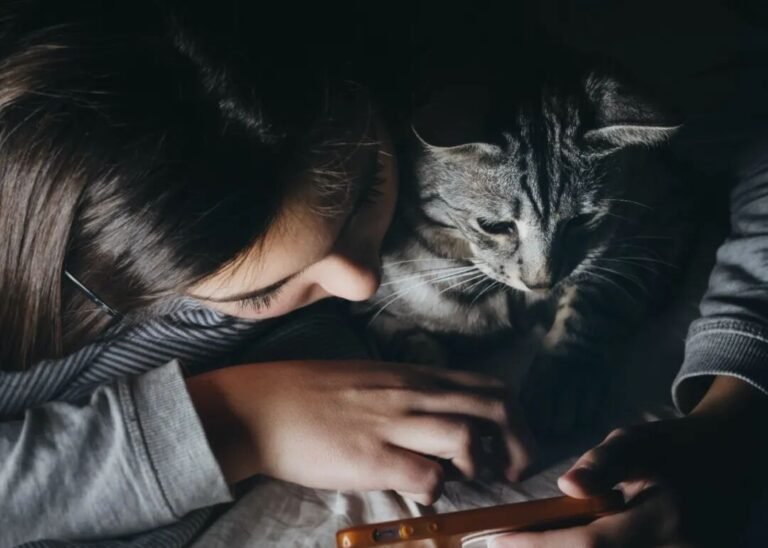
But when I took her to the hospital, she refused. When I suggested finding her a counselor, she refused too. Every day she just stayed home on her phone. And for every day she stayed there, I cried just as long.
I really didn’t know what to do with her anymore. So I went ahead and booked a counselor for myself. I wanted a professional to turn to.

When I first met the counselor, I tried hard to keep myself together, to act like a grown-up, and began telling her about my daughter.
I said, “I even quit my job, wanting to be there for her properly, to help her. But she knows how much school matters, and she still uses her condition as an excuse to stay home. It makes me feel like I’m the fool, like I’m too soft-hearted, like she’s been calculating and playing me over and over.”
I also said, “Looking at her, and then thinking back to myself at fifteen, it feels so unfair. Why is it that at fifteen, my mother didn’t want me and didn’t care for me, and everything — food, clothes, daily things — I had to provide for myself, and every mistake I made, I carried alone? Why was it that I wanted to study and had no chance, while she talks about education being the only way out but is always saying she’s having an episode and needs to stay home, playing games all day, pouring her heart out to everyone except me — not one word to me? What exactly am I to her?”
Aggrieved, resentful, unwilling, furious — all of it came flooding in. I went from cautious to hysterical, until I couldn’t hold it in anymore. I covered my face with both hands, and the tears kept seeping through my fingers.
I felt like I had been driven to the edge of a cliff and wanted to jump.
The counselor stayed quietly with me. After I don’t know how long, she said softly, “Can you open your eyes now and look at me?”
I shook my head. And then shook my head again.
I could feel her move a little closer. She first tried touching my shoulder, then gently wiped the tears from my hands with a tissue.
I saw her crouch down in front of me, looking at me tenderly, and say, “Next time you feel like crying, you can try to keep your eyes open…”
In that moment, I felt my heart being held, warmly held.
A Child’s Silence Is Because Of The Parents
Once I had calmed down, the counselor began to carefully unpack the problem with me.
She said, “Your parents emotionally abandoned the child you were, and there’s a part inside you that was never stitched up. And your daughter now is tearing at that very wound.”
“Aren’t you someone who both wants to be, and resents having to be, a good mother? Don’t you, on the one hand, hope your child grows up healthy and happy, and on the other, wish she could also taste what it’s like to be unloved — so she can truly experience for herself who is actually in more pain, you or her?”
I got agitated. “Sometimes I’m strict with her because I want her to take fewer wrong turns. I don’t expect to be a mother she’s proud of, but she says things like, ‘ Why did you even give birth to me? Why do you have to be my mother?”
Even as I said it, scenes flashed through my mind —
During her episodes, my daughter would shout at me: “You always think you’re the pitiful one. You always think you have it so hard. You have no idea what I’m going through. You can’t possibly understand how I feel. I’m more pitiful than you. I’m worse off than you. I’d rather be like you — no one caring since I was little — than be where I am now!”
The counselor told me that, in truth, we still carry inside us the unprocessed trauma of childhood. Those feelings, those experiences, have been hiding in our bodies all along.
We think we’ve let it go. But when we become parents, we find ourselves becoming more and more like the parents we hated.
“As a mother myself, I can feel the helplessness and despair you were in. But look at you — how remarkable you are, how far you’ve come, how hard it must have been. And as your counselor, I want to say this seriously to you: because of the love you missed as a child, you may have very little patience left for anyone or anything — including your own daughter. Maybe even a small thing triggers excessive blame and complaint from you. Is your daughter, by any chance, very afraid of you?
I thought of how she was always silent. I thought of how she stood so far away from me. I thought of her arm, covered in scars…

The counselor went on: “You want to work out a feasible solution with her, but her lack of cooperation makes you feel rejected. You gradually become angry and start criticizing her, bringing up the past, hoping she’ll take the initiative to admit she was wrong and promise never to do it again — but she gives you no response at all. Is that right?”
Me: “Yes, I was so angry. I tried everything, talked to her every way I could, and I felt like a clown, while she acted like a bystander.”
The counselor asked me in return: “Is she toward you the way you were toward your mother?”
I was stunned. I froze for a few seconds, and then a chill ran down my back.
Yes. The same.
As a teenager, my mother and I were constantly in a cold war. We could go months — several months — without saying a single word to each other.
What A Child’s Silence Can Mean
The counselor said:
“The truth is, a child’s silence can mean several things. Let me lay them out for you.
1. It’s deliberate. This is passive aggression — creating uncertainty for you, making you feel defeated and humiliated.
2. The child doesn’t know what to do. She may have already decided that whatever she says, you won’t listen, or that you can’t understand her, so she simply stops talking. In psychology, this is called learned helplessness.
3. A frozen state. That is, in the process of demanding a response from her, maybe a certain phrase or a certain gesture of yours triggered a stress reaction in her. If her anxiety runs higher and she’s more sensitive, then to protect herself, she chooses not to respond as a way to hide her fear and depression. At least, in her view, avoiding a fight and letting you vent however you want is her best available option.

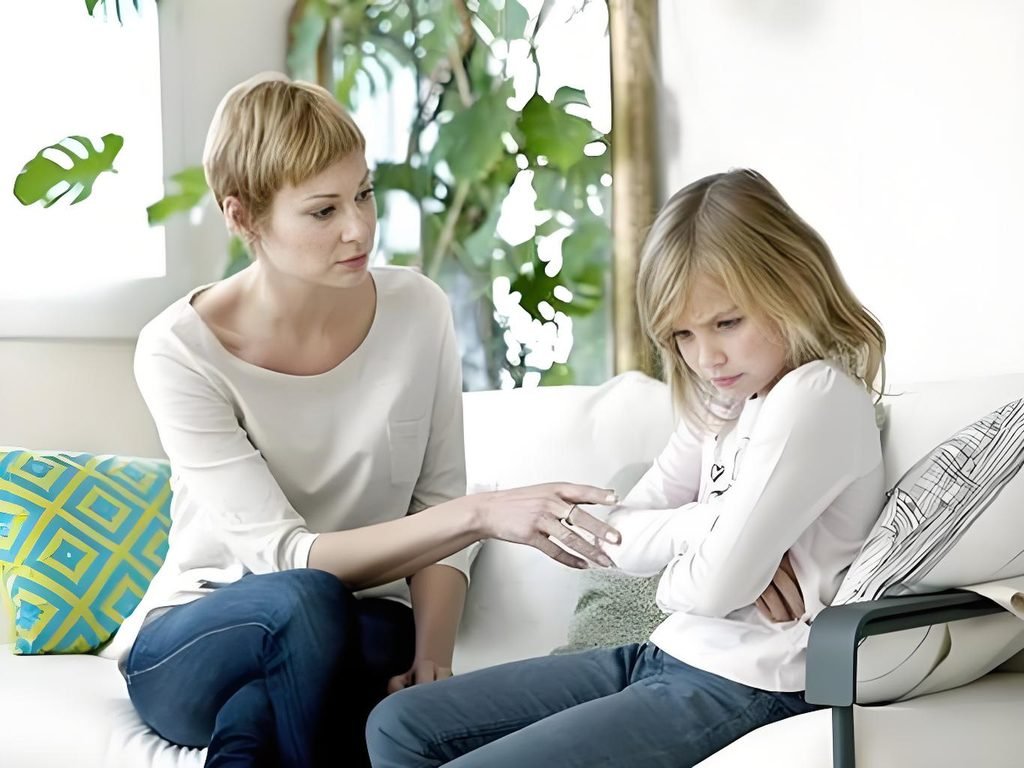
So when conflict arises between you two, you fall into a pattern where one demands and the other withdraws. As I said before, in any relationship, whoever suffers is the one who changes. From everything you’ve told me, when facing conflict, you want change more than your daughter does. When good communication can’t be established, you are in more pain than she is. Perhaps while you’re racking your brains trying to get her to respond, what she wants most is for this painful conversation to end soon.
You need to take seriously what the purpose of your communication is right now. Replace ‘you’ and ‘I’ with ‘we.’ Let your daughter feel that you two are on the same side, not on opposite sides.”
Hearing the counselor’s analysis and advice, everything suddenly became clear to me.
The Little Me I Saw Through My Daughter
Guided by the counselor, I laid bare both my child’s affairs and my own.
In that counseling room, I saw — through my daughter — another, much smaller version of myself.
In that little me, there were many things I refused to accept about myself.
For instance, saying the opposite of what I mean: the people and things I like and long for most, I push away and distance myself from.
For instance, in front of the person I care about most, I deliberately act badly, wanting to prove through this that I can be loved unconditionally.
Looking back now, from the moment I stepped into that counseling room, the underlying color of my life stopped being gray.
My past — when I glance back at it now and then — every step I took counted. Gaining more varied experiences from what I’ve been through is a treasure.
My present — me, about to turn forty — I will keep working on my sense of responsibility and my resilience, and keep learning how to love myself and my daughter better.
In short, life in this world is sweet and sour, bitter and spicy; joy and anger, sorrow and happiness.
As time and experience accumulate, we learn to meet a problem — solve it — meet a new problem — solve it again.
And in that process, we discover more versions of ourselves we never knew, and find out what we truly need.