Are You Loving a “Hunter-Type Partner”? Here’s Why It Matters
“Today I walked past that shop, and the new bread smelled amazing, so I brought one back for you.”
“On my way home from work, I saw the strawberries at the supermarket were really fresh. I know you love them, so I picked up a box.”
“I passed a bookstore, saw this book, and bought it on a whim—I had a feeling you’d like it.”
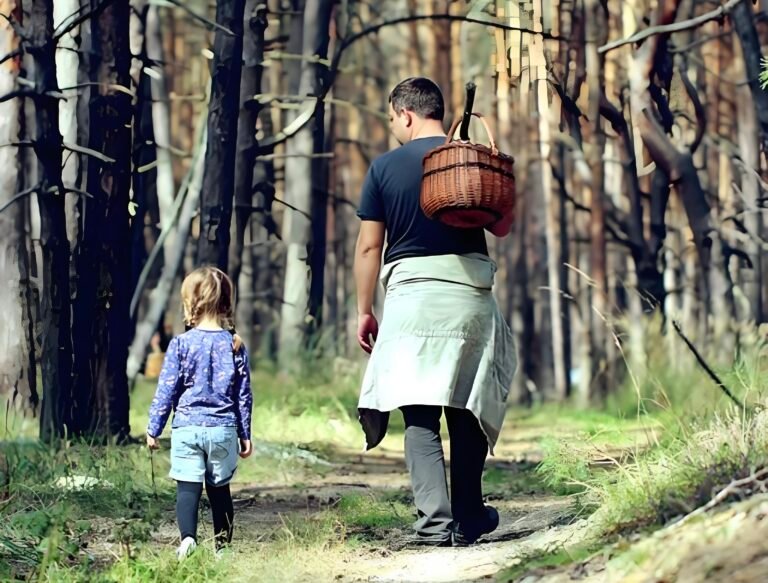
A hunter-type partner is someone who has made a habit of grounding love and thoughtfulness in the ordinary details of daily life. Like a hunter setting out for the day, wherever they go and whatever they see, they’re always thinking about bringing something home to share with you. It might be food, a snack, or some small, unremarkable little object. These seemingly tiny “spoils of the hunt” come without fancy packaging or a hefty price tag, yet they are often the things that warm the heart the most.
If you happen to have such a hunter-type partner by your side, then congratulations: you’ve loved the right person.
Today, Kelly wants to talk with you about just how precious a hunter-type partner really is in a relationship.

The Love of a Hunter-Type Partner Is Unconscious Remembrance and Quiet Favoritism
To a hunter-type partner, love isn’t calculated flattery—it’s instinct. They never worry that you’ll want too much; instead, they keep you in their heart every single moment, afraid they aren’t giving enough.
Generally, partners like this tend to share these three traits:
1. Loving you has become an “automatic response.”
For a hunter-type partner, seeing something good and immediately thinking of you—wanting to bring it home—is as natural as drinking water when you’re thirsty. Their affection doesn’t need elaborate planning or a cost-benefit analysis; it’s simply part of the day.
For instance, when they pass through a supermarket, their eyes scan the shelves, and they instinctively reach for a box of your favorite yogurt. Wanting to be good to you has been written into their DNA—it has become a reflex that needs no reminding.
This kind of unconscious care offers the most stable and unquestionable emotional reassurance, giving you the quiet confidence of being deeply and securely loved.
2. They say “I love you” with concrete actions.
In The Five Love Languages, Gary Chapman notes that for some people, the primary way of expressing love isn’t sweet words but “acts of service.” A hunter-type partner is exactly this kind of person of action.
They may not say “I love you” all the time, but they express their favoritism by casually bringing you something you like—one of the most primal, most unpretentious forms of intimacy.
Consider a common scenario: some partners, on their way home from work or when traveling for business, might text and ask, “Want me to bring you something to eat?” or “Do you want a gift?”—but it’s just lip service. They forget a moment later and never really take it to heart.
A hunter-type partner isn’t like that. Drawing on a deep understanding of you, they’ll bring back food or a small gift you’re very likely to love, creating a little surprise. They skip the superficial asking and go straight to empathy and execution.
This isn’t “presuming to decide for you”—it’s knowing you, built on a long stretch of life together. Their actions say: “I know what you like and what you want, and I’m willing to act to make you happy.”
Every little surprise brought home offhand is evidence that they love you with intention.

3. Their giving carries no sense of sacrifice and demands nothing in return.
The other day I was chatting with my friend A, who said she’d changed a lot since falling in love. Sometimes after work, even when she goes shopping alone, she really wants to buy something for her partner. When she buys herself a coffee, she thinks about bringing one back too. When she sees something interesting, she wants to take it home and show it to them.
She doesn’t feel she’s making some huge extra effort, and she doesn’t expect an equal return. The act of buying something for her partner already makes her happy.
Psychologists Richard Ryan and Edward Deci proposed Self-Determination Theory (SDT), which holds that when a behavior satisfies our basic psychological needs—autonomy (I do it willingly), competence (I know what they like), and relatedness (it brings us closer)—the behavior itself produces immense intrinsic satisfaction.
Hunter-type partners are just like this. They don’t experience their giving as one-sided depletion or sacrifice. On the contrary, in the very act of loving, they affirm their own capacity to love and feel the happiness that intimacy brings. That, in itself, is a rich reward.
Being with a Hunter-Type Partner Is a Powerful Tonic for Your Life
If you happen to have such a partner, walk forward with them without hesitation.
Because with someone like this, your days will grow steadier and happier.
1. It creates frequent positive interactions and sets a virtuous cycle in motion.
Psychologist Caryl Rusbult conducted a study surveying 1,000 people in romantic relationships and found that relationship satisfaction has no necessary connection to how long you’ve been together—it depends far more on how deeply they invest in the relationship. The more emotion and material investment they put in, the higher their satisfaction; those who invest less tend to break up easily.
Every time a hunter-type partner “brings something home offhand,” and every time you respond with warmth, a positive interaction is created, small as it seems: their effort makes you feel cared for, and you respond in kind; that response makes them feel seen and appreciated, making them want to keep giving.
These small but frequent sweet interactions continuously stimulate the brain’s pleasure response (releasing dopamine, for example), so both of you unconsciously come to associate everything about the other with a feeling of joy. Over time, this pattern becomes a virtuous cycle, and these ordinary little daily joys become the very best preservative for a relationship.

2. It makes you feel “seen,” meeting your deepest emotional needs.
For many people in a relationship, the greatest fear is that “there’s no love left.” A hunter-type partner’s behavior steadily transmits three signals of love:
- “I’m thinking of you all the time”—meeting your need to be noticed and valued.
- “My resources are yours to share”—actively expressing closeness and a sense of being one.
- “I will take the initiative to invest in us”—giving you a tangible sense of security.
Erich Fromm wrote in The Art of Loving: “Love is the active concern for the life and the growth of that which we love.” To truly understand and respond to a partner’s needs is the highest-quality emotional support there is.
A hunter-type partner makes you feel that they are eager to be your most attuned ally. To be loved is already precious enough. But rarer still is to be understood, to be seen, to be firmly chosen and protected.
3. It strengthens the emotional bond and increases the relationship’s resilience.
American psychologist Willard Harley introduced the concept of the Emotional Bank Account—he likens a relationship to a bank account that records the countless little moments between two people. Every pleasant interaction is a deposit, making the relationship healthier and more stable. Every negative interaction is a withdrawal, draining the accumulated emotional savings and leaving both people colder toward each other.
The daily giving of a hunter-type partner is a constant stream of deposits into your emotional account. When conflict arises, or external pressure hits, the abundant “emotional capital” in that account acts as a buffer.
If your savings are thin, even a small friction can break the relationship apart. But if you’ve stored up enough everyday warmth and trust, you’ll have far more strength to face the storms together and resolve your differences.

The Prerequisite for a Good Relationship: Both People Genuinely Put Love In
In See You Again (Season 4), Li Xingliang flew all the way to Shanghai just to buy qingtuan (sweet green rice balls) for his wife Mai Lin—and it backfired completely. He brought back red bean paste, while what his wife actually loved was salted egg yolk and pork floss.
The point of “hunting” isn’t what spoils you bring home; it’s whether both people are willing to look carefully and truly see what the other wants.
Only then can loving and being loved happen at the same time. This asks three things of us:
1. For the hunter: focus on your partner’s present needs, not on moving yourself.
A true hunter-type partner observes and adapts to changes in their partner’s needs. So try, in daily life, to notice what your partner has been paying attention to lately, and watch their genuine reaction when they receive your “spoil”—their expression, their tone. Don’t assume they’ll definitely be happy just to satisfy your own feeling of “look at me, I’m putting in effort.”
And allow your partner’s tastes to change. Accept that something they loved in the past may not be what they need now.
“Hunting” isn’t always about bringing back a physical item. It can also be deep empathy and care for the other person—taking the initiative to do housework when they’re exhausted, cooking a meal they love, simply sitting quietly beside them when they’re sad. Giving on the emotional level is another form of hunting.
2. For the receiver: see your partner’s love and give positive feedback.
The one receiving love also needs to treasure and protect it. Don’t take the other person’s efforts for granted; learn to give positive, specific feedback.
When you receive the “spoil,” express your joy in person through words, expressions, and gestures. For example, compared with a polite “thanks,” a more specific expression of gratitude will likely make them much happier: “This cake you brought is exactly what I was craving today—you know me so well!”
You can also bring up their thoughtful gestures from time to time afterward, so they feel recognized: “That cake you bought last time was so good—let’s go there together next time.”
The renowned American psychologist B. F. Skinner proposed reinforcement theory: positive reinforcement means that after an individual performs a behavior, receiving a reward increases the strength, probability, or speed of that behavior or response.
Your positive reaction is positive reinforcement for your partner’s effort. Specific, sincere feedback tells them: “This behavior makes you happy—you like it when I do this,” which greatly increases both their willingness to repeat it and the joy they take in doing so.

3. Mutual devotion: the receiver also needs to give proactively.
A lasting relationship is never one person giving unilaterally while the other simply receives. The healthy state is two “hunters” seeking out surprises for each other.
So the receiver should also try to share proactively, creating small moments of tenderness for the other amid the trivialities of daily life. This isn’t an even trade; it’s a way of conveying love: “You are cherished and held in my thoughts too. I know how happy it feels to be understood and cared about—and I want you to feel that beauty as well.”
In Closing
The most romantic thing in a relationship doesn’t have to be grand and dramatic. It might simply be someone who remembers to bring you a piece of candy every single day.
A hunter-type partner’s day-in, day-out unconscious remembrance and giving is, in itself, the most sincere and enduring confession of love.
This kind of love isn’t showy, yet it seeps into every ordinary day. It isn’t expensive, yet because it never stops, it becomes infinitely precious.
So please, cherish the partner who always “just happens” to bring something home for you.
May we all meet someone who loves like this—and may we all become someone who loves like this, turning love into the most ordinary part of everyday life.