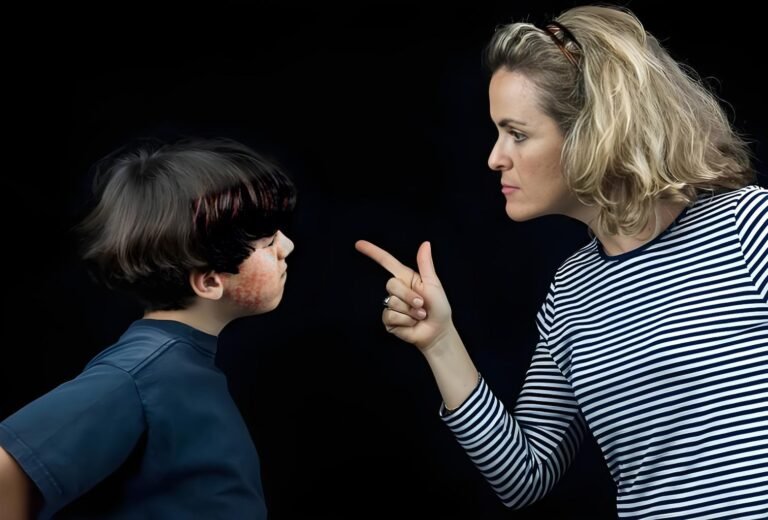
How to Accept the Fact That Your Mother Doesn’t Love You
I recently came across a post on Instagram: “How do I accept that my mother doesn’t love me?”
The poster was a young woman who had only recently started working. In her memory, her mother had always been cold toward her.
After her parents divorced, her mother remarried fairly quickly and moved far away. Aside from sending child support every month, she had almost no contact.
Not long ago, the young woman graduated from university. Her mother immediately messaged her:
“I’ve done more than enough raising you through university. From now on, try not to contact me.”
The girl wrote: “Even though I realized a long time ago that my mother doesn’t love me, I’ve never been able to talk myself into accepting it.”
Many people in the comments related deeply:
- “Me too. Every time I tell myself not to expect too much from her, but it still hurts when she hurts me.”
- “My mother has never once hugged me. Acting cute with her never got a response, and when I went to her upset, I only got scolded.”
As the most intimate companion in our earliest years, a mother’s emotional bond with her child is vital.
But there do exist some “mothers” who are unable — or unwilling — to respond emotionally to their children.
Why does this happen? And what should a child do when faced with such a mother?
Today, Kelly wants to talk with you about the “emotionally absent mother“.
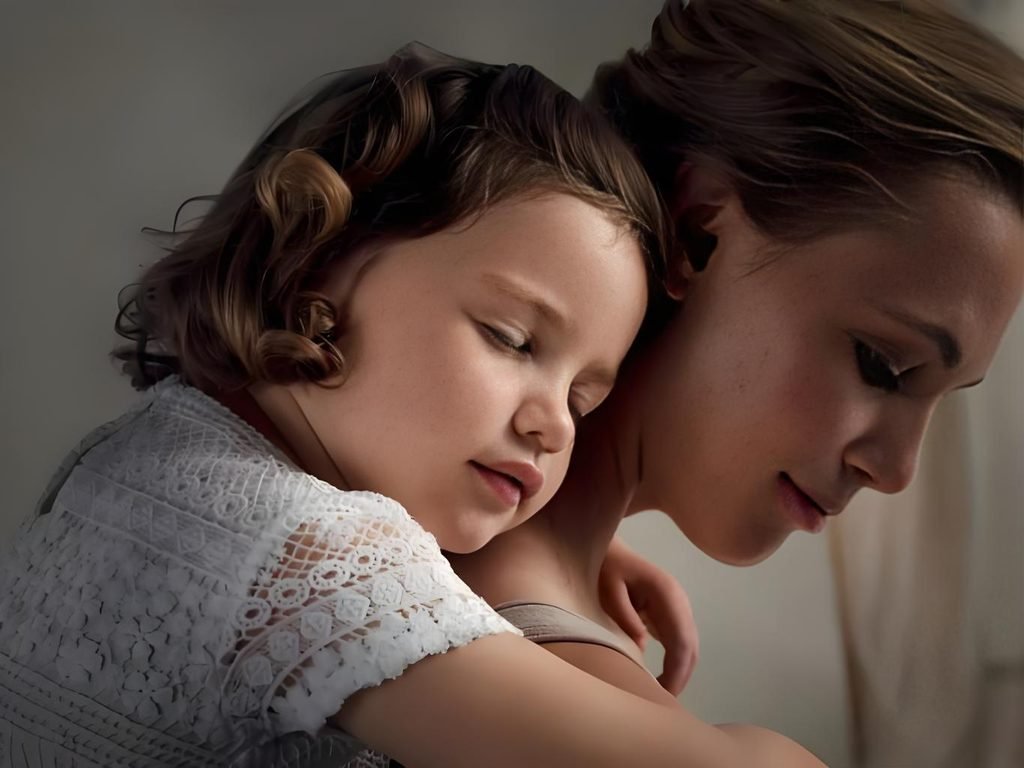
What Is The “Emotionally Absent Mother“
The French psychoanalyst André Green was the first to propose the concept of the “dead mother.”
These mothers are not literally dead, but to the child, they might as well not exist.
Green argued that such mothers exist in a state of emotional “absence” — to the child, it is as though they were dead.
Later, psychologists expanded on Green’s concept and divided the “dead mother” into the following four types:
1. The mother who is physically separated from the child
Commonly seen in left-behind children, children of single-parent families, and so on. These mothers mostly provide financial support, but because they cannot be with the child year-round, they miss countless opportunities for emotional expression.
2. The mother who invests her emotions in other people or things
For example, in families with several children, a mother may, out of favoritism or simple lack of energy, direct more of her emotion toward the child she prefers, or toward other pursuits.
Xiaoshu’s family, mentioned earlier, belongs to this type. Fu Dongxin was not without maternal love — she simply gave all of her feelings to the little girl next door, and to the literary career she loved.
3. The mother who fulfills only basic caregiving duties and refuses to show emotion
These mothers take care of the child’s daily life but do not care about the child’s feelings. In their view, the child’s emotions don’t matter.
So they rarely communicate with the child. They only educate coldly or scold harshly, never attempting to understand what the child truly feels inside.
4. The mother who takes on no parenting responsibility at all
After giving birth, these mothers are unwilling to shoulder any maternal duty, treating the child as a burden and a liability.
Take Moon Dong-eun in the TV series The Glory, for example: her mother didn’t care about her life or her studies, and when Dong-eun was bullied at school, she even signed a settlement agreement for money.
Whichever type they fall into, these mothers share one defining feature: emotional absence.
The child has a mother in name, but cannot feel a mother’s love.

“Emotionally Absent Mother Syndrome”
Children raised by an emotionally absent mother are at high risk of developing “dead mother syndrome.”
From a psychodynamic perspective, it is considered a subtype of narcissistic personality disorder, and it causes harm that cannot be ignored — to the formation of the child’s early narcissism and to the whole of their future life.
1. The loss of a sense of existence and of happiness
The mother is the most important object through which a child builds a connection with the objective world.
The psychologist Winnicott believed that a newborn has no concept of self and experiences itself as part of the mother.
During this stage, the mother helps the infant establish a sense of existence by satisfying its “mirroring needs.”
In other words, a person can only exist as themselves in this world if they are first “seen” by the mother.
Conversely, if a child receives no emotional feedback from the mother, they cannot build a connection with the objective world.
They don’t know how to “exist” in reality, and so easily develop a feeling of emptiness, a sense that life has no meaning.
Green also found that, under the influence of a mother’s emotional absence, some children tend to compensate in other areas.
They work extremely hard, and therefore easily achieve conventional, worldly success.
But they cannot feel the joy or happiness that success brings. The moment they stop, they cannot help but ask themselves:
“Why doesn’t my mother love me?”
What’s more, because they long for a mother’s love, these children are more likely, as adults, to empty themselves out in pursuit of it — falling into their mother’s control.

2. The emergence of “destructive” behavior
There is a famous experiment in psychology called the “still-face experiment.”
The experiment observes the interaction between a one-year-old and its mother.
At first, the mother interacts normally, responding to the child’s emotions and movements.
Then, at the researcher’s request, the mother becomes expressionless and gives the child no feedback at all.
The child then begins trying everything — smiling at the mother, waving its fingers, shouting, crying, and screaming — hoping to get a response.
Finally, the mother returns to her normal state, and only then does the child’s emotion settle.
In other words: even if the mother offers no emotional response whatsoever, the child will do its utmost to attract her attention, trying to wake the “emotionally dead” mother.
Frank was exactly like this: he was terribly mischievous from a young age, and his parents were called in to school every few days.
He drifted through his entire adolescence in a daze, riding his bicycle aimlessly around the streets, and even ended up at the police station for fighting.
He did these things partly to get his mother’s attention, and partly to use extreme behavior to confirm that he was alive — to fight off the emptiness inside him.
What’s worse is that these children repeat the same relational pattern in their other relationships.
Because the unmet “mirroring need” means a total “denial” and “neglect” of the child by the mother.
This causes the child’s “primary narcissistic injury” and may even push them toward the extreme of “pathological narcissism.”
As a result, they place extremely high demands on their partners. The moment the other person fails to respond on some matter, they become hysterical and argue endlessly.
And this arguing is precisely what they need: because they are terrified of the “dead mother’s” coldness and indifference, they deliberately provoke conflict — or behave in off-putting ways — to avoid falling back into “not being responded to,” and to gain a sense of existence by hurting others.
The mother is not actually dead, yet she is as good as nonexistent — and to the child, she is like the only hope left in the midst of despair.
As long as the mother is still alive, some children will keep searching for the reason they are not loved, and in doing so miss the chance to be happy.
Seen from both of these angles, the harm an “emotionally absent” mother does to a child may well last a lifetime.
Of course, it isn’t only mothers. Some fathers also occupy the position of the “emotionally dead” in a child’s upbringing.
This can likewise lead a child to develop “father absence syndrome,” negatively affecting their personality and their life. (Its mechanism differs from that of “dead mother syndrome,” so I won’t expand on it here; the discussion below also focuses mainly on the mother.)

Why Don’t Some Parents Love Their Children?
Psychologists offer the following explanations.
1. Physiological factors
Winnicott once said: “It is perfectly normal for a mother to hate her child.”
Pregnancy and childbirth bring unavoidable physical changes to a mother’s body, producing negative emotions she cannot control.
The most common is postpartum depression, which makes it hard for a mother to feel “love” for her child.
Green’s original observation was of mothers who had once loved their children, but who withdrew that love because of depression — and so became “dead mothers.”
Put differently: even without the negative emotions of childbirth, when a mother is filled up with anxiety and depression, it is very hard for her to leave emotional room for her child.
2. Inability to identify with the “mother” role
There are three possible reasons.
a. Intergenerational trauma
Some mothers, when they themselves were children, never felt a mother’s love — so they never learned how to express it. All they can do is pass a faulty model of parenting on to their own children.
They may even develop hatred for the “mother” identity out of resentment toward their own mothers.
This happens more easily in same-gender parent-child relationships: a mother projects her childhood self onto her daughter, activating many of her own childhood “trauma responses,” producing jealousy — the feeling that if I was never loved, why should my daughter get to be loved? (The same applies between father and son.)
b. The “motherhood penalty”
Society’s demands regarding “maternal duty” place excessive pressure on mothers.
This causes them to unconsciously shy away from the role, and eventually that avoidance is transformed, at an unconscious level, into resentment toward the child — hurting the child’s feelings.

c. Discordant family relationships
When a mother faces enormous pressure, she can care for her child well — provided she receives enough support and is herself well cared for.
The opposite is true in families of “widow-style parenting”: the father’s absence leaves the mother with an unbearably heavy caregiving load, so that she has no energy left to give the child the responses it needs.
Beyond that, if the marital relationship is bad, a mother may project her dissatisfaction with her partner onto the child.
In Moses on the Plain, for instance, Fu Dongxin doesn’t love Xiaoshu because she only discovered after marriage that her husband had once persecuted her uncle.
She therefore could not accept the child she had borne with an enemy.
So some mothers don’t love their children because they are trying to escape a failed marriage by denying the child’s very existence.
If You Grew Up in a Family Like This, Don’t Despair — Try These Three Steps
1. The preparation stage: let go of fantasies and expectations about your parents
For a child, admitting that one’s parents don’t love them is a very hard process. It means actively placing yourself in an environment where you no longer expect any response.
But only in this way is it possible to climb out of the swamp of being unloved.
In this process, you don’t need to announce your decision to your parents (for many people, that is far too hard). What you need is a shift in thinking: try to see your parents as two ordinary adults.
That is to say: the parent-child relationship between you is not something you can decide on your own. It requires effort from both sides.
At the same time, even if they are unable to love you because of childhood trauma or an unhappy marriage, it is not your fault.
On the contrary, as adults, they should deal with their own problems, not take them out on their children.
Once you’ve made this psychological preparation, try the next step.

2. The transition stage: find another idealized object
For a child, the early parent represents more than a caregiver. They are also an idealized object.
They carry the child’s expectations of an “ideal self,” and they are the source of the child’s lifelong sense of worth and meaning.
So when you have an “emotionally absent” parent, try to find another idealized object — for example:
grandparents, a teacher, or some other person you respect.
After one of Frank’s arrests, he met a young police officer. This man neither ignored him the way his mother did, nor indulged him the way his father did; instead, he sternly criticized and educated him.
For the first time, Frank felt that he existed.
Later, Frank went back to the police station hoping to see him again, only to learn that he had died in the line of duty.
Shaken by this spirit of sacrifice, Frank had the thought of taking responsibility for himself for the very first time in his life.
This young officer became his new object — he let Frank understand what a goal is, and what it means to be alive.
So Frank stopped fighting, studied hard, got into the police academy, and became a police officer himself.
The search for such an idealized object may be only a temporary refuge — but it can carry you through the days when you most need support.

3. The facing stage: create a “holding environment” for yourself
Finally, when you have grown stronger, you will come to realize:
No part of your education was ever meant to be completed by your parents alone — not even your education in love.
At this point, you can create a holding environment for yourself (or find a therapist): an environment in which every person and every thing makes you feel safe.
Then, try within that environment to face the past you cannot accept, using your new experience to interpret and dissolve the harm it caused, and to form new perceptions.
Through this re-education of the self, you complete the things your parents were supposed to do for you.
In Closing
Perhaps, for adults, love is itself a very costly emotion.
So pinning all our hopes on being loved by others will inevitably lead to disappointment.
But learning to love yourself, at least, keeps you from falling into despair.
We cannot choose our past, but we can decide our future.
May you and I, under any circumstances, be able to love ourselves, take responsibility for ourselves, and find the meaning of being alive within ourselves.