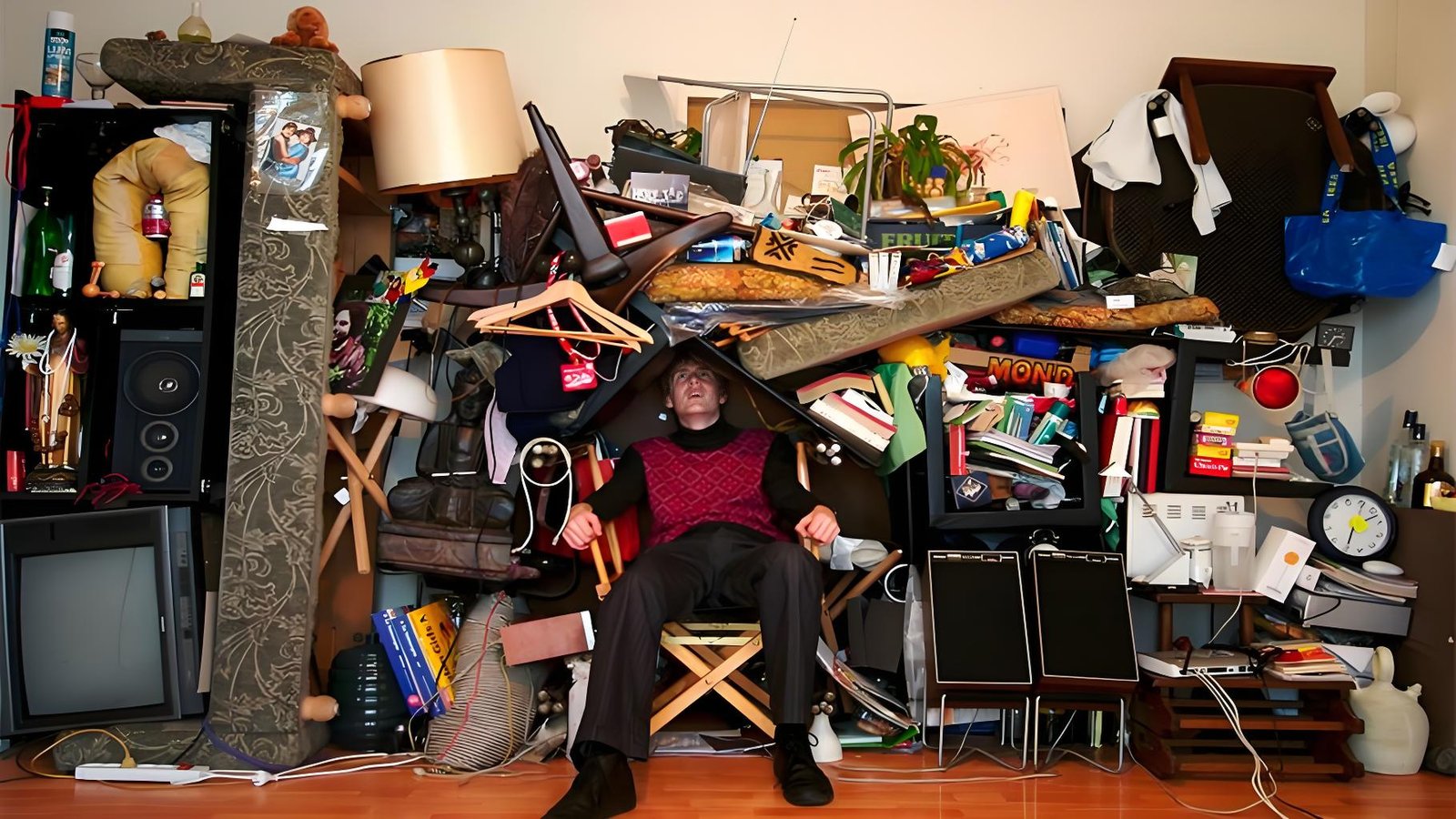
Hoarding Disorder: When Clutter Steals Life
In a world that often celebrates minimalism and Marie Kondo’s mantra of “does it spark joy?”, the inability to let go of objects can seem baffling to outsiders. We see it in viral news stories: houses buried under mountains of newspapers, hallways narrowed to slits by stacks of plastic containers, and rooms where the floor has not been seen in years. While many might label this as extreme laziness, eccentricity, or a lack of self-discipline, clinical psychology recognizes it as a distinct and serious mental health condition: Hoarding Disorder.
Once considered a subtype of Obsessive-Compulsive Disorder (OCD), Hoarding Disorder was reclassified in the Diagnostic and Statistical Manual of Mental Disorders, Fifth Edition(DSM-5) as its own entity under the category of “Obsessive-Compulsive and Related Disorders.” This shift acknowledged that while there is some overlap, hoarding has unique features, underlying mechanisms, and treatment challenges that set it apart from classic OCD.
Defining the Disorder: More Than Just Messy
At its core, Hoarding Disorder is characterized by a persistent difficulty parting with possessions, regardless of their actual value. This difficulty is driven by a perceived need to save items and intense distress associated with discarding them. The result is an accumulation of clutter that congests and compromises the intended use of living areas—kitchens become unusable, beds become storage bins, and exits become blocked.
To meet the DSM-5 criteria, the symptoms must cause significant distress or impairment in social, occupational, or other important areas of functioning. It is not merely a consequence of another medical condition (like brain injury) or a normative cultural practice.
There are three primary components to the disorder:
- Information Processing Deficits: Individuals with hoarding disorder often struggle with attention, categorization, and decision-making. They may feel overwhelmed by choices (“Should I keep this? Should I toss it?”) and avoid making decisions altogether.
- Emotional Attachment: Objects are not just “things.” They are often viewed as extensions of the self, sources of safety, or reminders of cherished memories. Discarding an item can feel like discarding a piece of oneself or losing a potential future opportunity.
- Behavioral Avoidance: To escape the anxiety of deciding what to do with an item, individuals simply acquire more and avoid discarding anything. This creates a vicious cycle of accumulation.
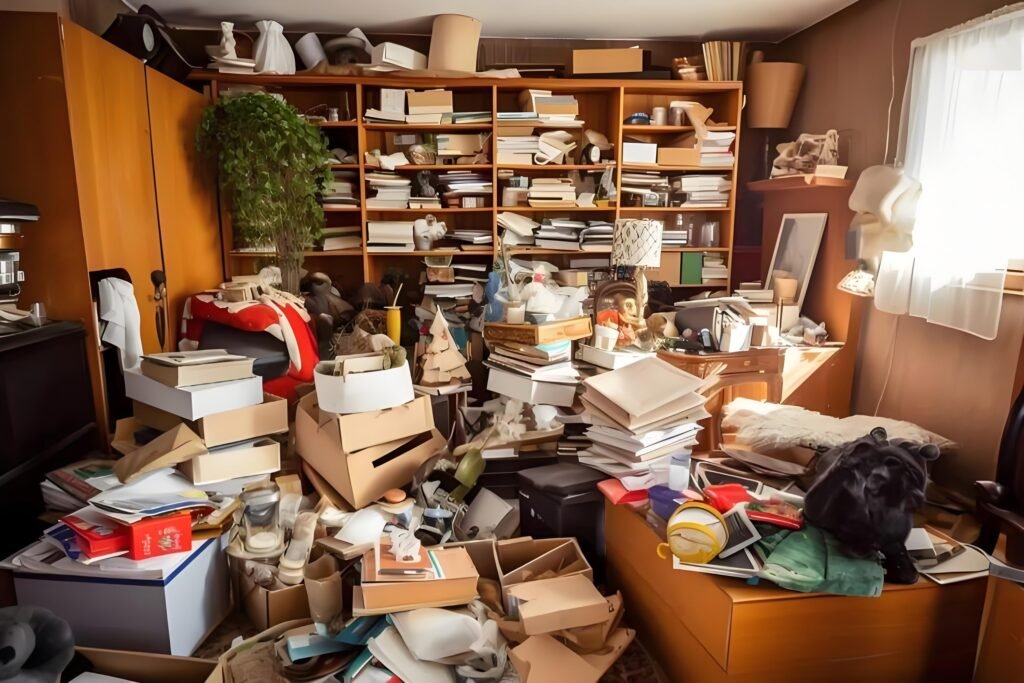
The Spectrum of Severity
Hoarding exists on a spectrum. On the milder end, a person might have cluttered closets but still maintain basic hygiene and functionality in their home. On the severe end, the clutter becomes a biohazard. Homes may be filled with rotting food, animal feces, and piles of trash, leading to eviction, fire hazards, and severe health risks.
A common misconception is that hoarders are simply “pack rats” or “collectors.” There is a crucial difference:
- Collectors are selective; they seek specific items, organize them neatly, and take pride in their collections. Their hobby does not impair their daily functioning.
- Hoarders are non-selective; they accumulate vast quantities of seemingly useless items (old mail, broken appliances, used yogurt cups). The clutter causes shame, isolation, and significant impairment.
Causes and Contributing Factors
The exact cause of Hoarding Disorder is unknown, but research points to several contributing factors:
- Genetics: Studies suggest a strong hereditary component. If a first-degree relative has hoarding tendencies, the risk increases significantly.
- Brain Function: Neuroimaging studies have shown differences in brain activity in areas responsible for decision-making (the anterior cingulate cortex) and emotional regulation. These individuals may experience a “blunted” reward response, meaning they don’t get the same “thrill” from acquiring, but they experience extreme anxiety when considering loss.
- Stressful Life Events: Trauma, the death of a loved one, divorce, or financial ruin can trigger or exacerbate hoarding behaviors as a way to cope with loss or regain a sense of control.
- Beliefs about Possessions: Many hoarders hold maladaptive beliefs, such as “I need to keep this just in case,” “This object is unique and irreplaceable,” or “If I throw this away, something bad will happen.”

Treatment: A Delicate Process
Treating Hoarding Disorder is notoriously difficult. Unlike OCD, where patients often recognize their thoughts as irrational, many individuals with hoarding disorder do not perceive their behavior as problematic—a phenomenon known as “poor insight.” This makes motivation for treatment a major hurdle.
1. Cognitive Behavioral Therapy (CBT):
This is currently the most effective treatment. Specialized CBT for hoarding focuses on:
- Motivational Interviewing: Helping clients resolve ambivalence about discarding.
- Cognitive Restructuring: Challenging maladaptive beliefs about possessions.
- Exposure Therapy: Gradually exposing clients to the act of discarding items while teaching them to tolerate the resulting anxiety without engaging in avoidance behaviors.
- Skills Training: Improving organizational skills, decision-making, and problem-solving.
2. Medication:
While no medication is specifically approved for hoarding, Selective Serotonin Reuptake Inhibitors (SSRIs) may help reduce symptoms of anxiety or depression that often co-occur with the disorder. However, medication alone is generally less effective than therapy.
3. Professional Organizers:
Working alongside therapists, professional organizers can provide practical assistance in sorting and decluttering. However, if done without therapeutic support, cleanouts can be traumatic and often lead to a rapid relapse, as the underlying psychological issues remain unaddressed.
The Human Cost
Beyond the physical dangers, the human cost of Hoarding Disorder is immense. Sufferers often live in profound isolation, cutting off friends and family due to shame. Relationships fracture under the strain of clutter and conflict. In severe cases, Child Protective Services may become involved if children are living in unsafe conditions. Elderly hoarders are at high risk for falls and social isolation.
It is crucial to approach hoarding with empathy rather than judgment. Telling a hoarder to “just clean up” is as ineffective as telling a depressed person to “just cheer up.” It is a complex neurobiological condition that requires patience, specialized care, and a deep understanding of the emotional significance these objects hold.