Your Body Is Sounding The Alarm — 4 Signs of BFRB
Do you have any of the following habits you just can’t seem to control?
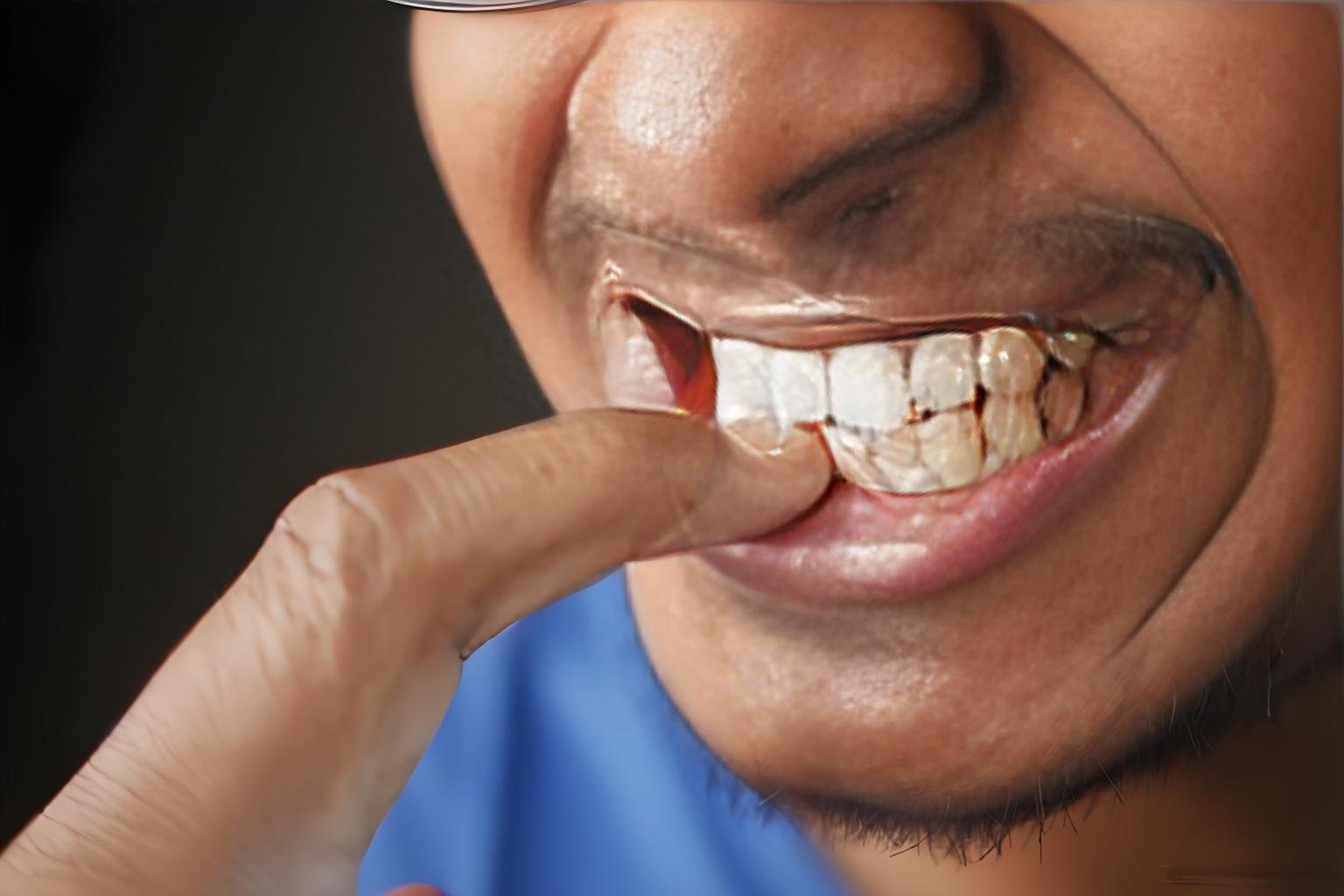
- You bite your nails — the moment they grow out even a little, you bite them down again.
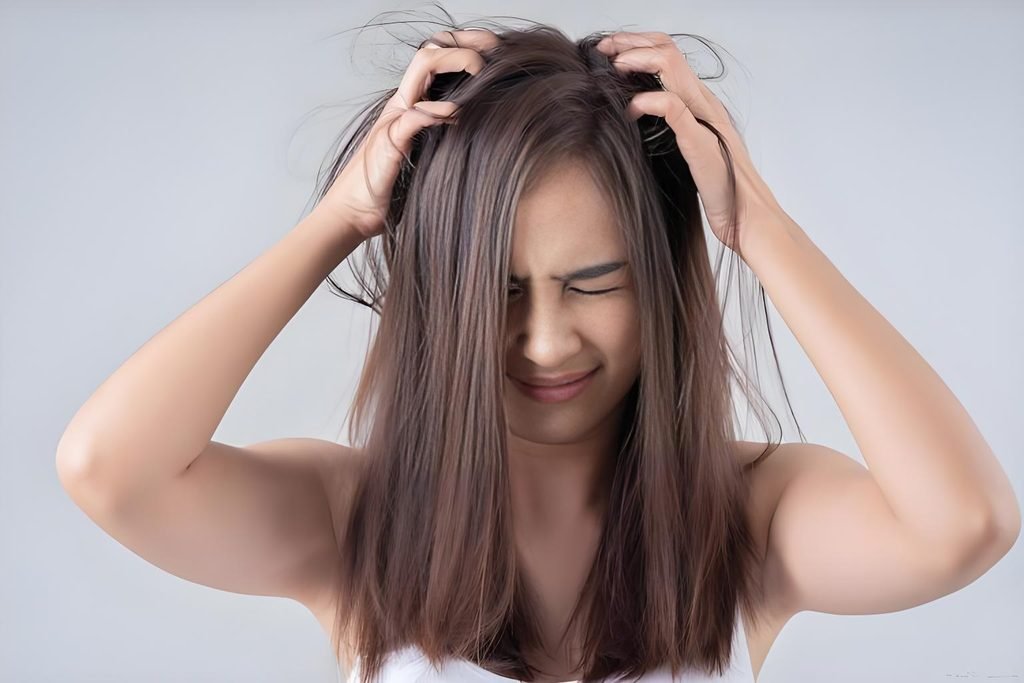
- You habitually pull at your hair, and each time you end up yanking out several strands.
- You pick at pimples on your face, not stopping until you’ve squeezed something out…
I’m not even sure when I picked up the habit myself, but I constantly find myself picking at those little bumps on my scalp. After I’m done, it actually feels… kind of satisfying. There’s this inexplicable urge inside me, driving me to do it.
But then I realized something that scared me: I couldn’t stop picking at my scalp.
A colleague of mine habitually bites his nails without even realizing it. One time, I turned around and saw him completely absorbed in nail-biting — he didn’t even notice his finger was bleeding. I was horrified and shouted to stop him. That’s when I saw it: all ten of his fingernails were uneven and dented. The sight was honestly shocking.
Later, I came across countless people online saying they’re addicted to “hair-pulling,” and they’re distressed by it:
“I love pulling out my facial hair and body hair. There’s something almost addictive about the pain. Is this some kind of psychological disorder?”
“I’ve practically pulled my hair out bald. How do I stop this behavior?”
So why do we do these things?
With this question in mind, I dug through a mountain of research and discovered that these behaviors are very likely linked to a psychological condition called Body-Focused Repetitive Behavior (BFRB).
Today, Kelly wants to take you deep into understanding BFRB, hoping this will be insightful and helpful for you and those around you.
BFRB: A Hidden Psychological Disorder
A Bilibili content creator once shared in a video:
“One night, I started pulling my hair at 9 p.m. and just couldn’t stop. I kept going until 2 a.m.”
What shocked me was that this wasn’t a one-time thing for her — she does it all the time. Unlike the occasional hair-pulling most of us do, her behavior meets the clinical definition of trichotillomania (hair-pulling disorder).
Trichotillomania, along with nail-biting (“onychophagia”) and skin-picking disorder, all fall under the umbrella of Body-Focused Repetitive Behaviors (BFRB).
In the Diagnostic and Statistical Manual of Mental Disorders, Fifth Edition (DSM-5), BFRBs are classified under Obsessive-Compulsive and Related Disorders, sitting within the broader OCD spectrum.
However, to be clinically diagnosed with a BFRB, a person must meet all four of the following criteria:
- The repetitive behavior causes physical damage (e.g., hair loss, skin lesions).
- It causes significant impairment in social, occupational, or other important areas of functioning.
- The person has made repeated attempts to reduce or stop the behavior.
- The behavior cannot be better explained by another medical condition (e.g., a skin disorder) or another mental disorder (e.g., substance abuse).
This means: if you occasionally pull your hair but it hasn’t reached the severity of doing it five times a day and being unable to stop — you probably don’t need to worry excessively. But if you meet all four criteria above, it’s strongly recommended that you seek a proper diagnosis and treatment at a qualified medical facility.
So what does living with BFRB actually feel like?
It’s deeply contradictory. On one hand, when people pull hair or bite nails, they experience a sense of relief and reward. On the other hand, immediately afterward comes guilt and self-blame.
This disorder most commonly emerges during adolescence, with many patients starting as early as childhood.
So — can self-control alone stop it?
A patient named Naonail, who is 40 years old and has been pulling her hair for 27 years, put it best:
“If I could stop pulling my hair, I wouldn’t still be doing it today. I would have stopped the moment I pulled that first strand at age 13.”
What Impact Does BFRB Have?
Generally speaking, BFRB harms both mental and physical well-being:
1. Physical damage and low self-esteem
Take trichotillomania as an example: after repeated pulling, patients may lose hair on their scalp, eyebrows, and eyelashes. Hair becomes sparse, bald patches form, and the scalp sustains damage.
For those with onychophagia (nail-biting), the nail plate shortens and deforms, and fingers can even become injured.
What’s more, a single patient may simultaneously struggle with trichotillomania, onychophagia, and skin-picking disorder — all at once.
Beyond physical harm, BFRB also tends to create low self-esteem.
Naonail hid her hair-pulling from her husband for 13 years before finally telling him a few years ago. She said: “I was terrified that if he knew, he’d leave me.”
It’s hard to imagine the torment she felt every time she looked in the mirror.
In 2016, researchers studied 94 adolescents with trichotillomania and skin-picking disorder. The results showed that skin-picking disorder significantly lowered self-esteem.
2. Interpersonal difficulties and social anxiety
One child shared in an interview:
“A classmate saw me pulling my hair, told everyone during class, and then all the kids spent the rest of the day laughing at me.”
Because BFRB is still poorly understood by the general public, people living with it rarely receive understanding — not even from their own parents. Some parents think: “They could just stop pulling their hair or biting their nails if they wanted to — they just won’t listen,” and resort to scolding or even hitting the child.
But as one friend described it: “Once you start pulling, it’s like driving a car at high speed — nearly impossible to stop.”
BFRB also severely impacts social life. For instance, a girl with bald patches on her head has to wear a wig, which makes swimming difficult and playing around with friends awkward — so she starts avoiding social situations altogether.
3. Reduced productivity at school and work
Once you start pulling hair or biting nails, it’s incredibly hard to stop — and everything else gets pushed aside.
Like the content creator who spent an entire night pulling her hair and couldn’t do anything else. Or the child who couldn’t focus in class because they were constantly biting their nails.
People with BFRB see their learning and work efficiency take a serious hit.
That’s why — before it develops into a full-blown BFRB — if you notice similar tendencies in yourself, it’s crucial to take them seriously and actively look for ways to manage and improve them.
What Causes BFRB? 5 Possible Factors
The exact cause of BFRB remains unclear, but research points to five potential contributing factors:
1. Neurotic personality
Multiple studies show that people with BFRB score higher on neuroticism. Those high in neuroticism tend to experience more anxiety, stress, impulsivity, self-consciousness, hostility, and emotional fragility.
The defining feature of neuroticism is emotional instability.
While the correlation between neuroticism and BFRB is well-established, a clear causal relationship hasn’t been proven. That said, several papers suggest a “vicious cycle”: emotional instability makes you more likely to pick or pull, and doing so then generates more negative emotions in return.
2. Parenting style
Parenting styles can be mapped across two dimensions — care and overprotection — forming four types: Optimal, Neglectful, Affectionate Control, and Affectionless Control (low care + high protection).
A study of 184 adults with trichotillomania and skin-picking disorder found that the most common parenting pattern reported was affectionless control from parents.
This finding has been echoed in clinical observations in China. The Clinical Psychology Department at Dongguan Third People’s Hospital analyzed patient records and follow-up calls, finding that 66.7% of patients had indeed experienced adverse parenting — particularly strict parental demands, with harsh criticism or physical punishment for mistakes or poor grades.
This underscores just how critical the family environment is to healthy psychological development.
3. Sensory habits
A study published in March 2024 found that sensory habits may trigger BFRB. For example: disliking the feel of skin impurities before picking, or disliking uneven or brittle nails before biting.
4. Stress and negative emotions
Multiple studies identify stress and negative emotions — boredom, anxiety, tension — as major triggers for BFRB. This is the most common cause in daily life and relatively more manageable.
For students, BFRB frequency tends to spike as exams approach and academic pressure mounts. Office workers under work stress are more likely to bite their nails or pull their hair to relieve anxiety. As the content creator said, she only pulls when facing difficulties or challenges.
These behaviors offer brief stress relief — which is exactly why they’re so hard to quit.
5. Family history
A study of 265 BFRB patients found that 77 (29.1%) had a first-degree family member with BFRB, and 59 (22.2%) had a first-degree family member with a substance abuse disorder.
Furthermore, patients with a family history of substance abuse spent more time per day pulling hair or picking skin, indicating greater clinical severity.
These findings suggest that family history deserves serious attention in understanding BFRB’s origins.

How Can We Cope with BFRB?
The most effective treatment for BFRB to date is Habit Reversal Training (HRT).
In one study, 12 patients with hair-pulling, nail-biting, and eyelash-picking underwent HRT. The results: by day one, all 12 had eliminated the habits. Long-term follow-up showed that 11 out of 12 never relapsed after following maintenance guidance.
Habit Reversal Training consists of three main steps:
Step 1: Awareness training with self-monitoring
BFRB comes in two types: conscious and unconscious. To reduce the behavior, you must consciously monitor it.
Method A: Keep a daily log. Use a notebook or phone memo. Set an alarm to remind yourself to record each episode in detail — ideally right after it happens.
For hair-pulling, your log might include:
- Time and situation before pulling
- Physical state (e.g., fatigue)
- Emotion or thought (e.g., anxiety, boredom, or thoughts about hair color/texture)
- Immediate thoughts/feelings after pulling (e.g., relief, release)
- How many hairs were pulled, from where, and for how long
This helps you identify which emotional state triggers the behavior — anxiety vs. boredom — so you can “treat the right cause.” For example, if it’s always work anxiety, maybe you need a lower-stress environment. If it’s boredom, pick up a hobby — sports, shopping, crafts — to keep your hands busy.
Method B: Save the evidence. Collect the pulled hairs or nail clippings in a sealed bag. This gives you a tangible对照 (reference point) for your log. It might feel awkward or painful at first — that’s okay. You can wait until symptoms improve before trying this.
Step 2: Situational control and competing responses
When a person repeatedly engages in BFRB in a specific situation (e.g., watching TV), that situation becomes a trigger.
First, avoid those situations when possible to reduce occurrence.
Second, create a competing response to replace the harmful behavior. For example:
- Want to pull your hair? Hold a small stuffed toy in your hand instead.
- Want to bite your nails? Put something in your mouth — sugarcane, bayberries, chicken feet…
Competing responses not only substitute the maladaptive behavior but also build confidence: the urge to pull or bite will fade over time on its own, without you having to act on it.
Step 3: Build a social support system
Social support means positive reinforcement from the people around you. It helps in two ways: it relaxes you and relieves tension, and encouraging feedback strengthens your motivation to change.
Bonus: 3 Emotion Regulation Strategies (by James Gross)
Since research confirms that negative emotions worsen BFRB, here are three evidence-based techniques:
① Situation selection. Spend more time in environments that make you feel happy, accomplished, and calm; distance yourself from those that trigger helplessness and stress. (One patient said her symptoms nearly disappeared after switching from a high-pressure job to a healthier work environment.)
② Distraction/attention deployment. Feeling anxious and about to pull or bite? Go take a shower, sleep, or go for a run. Feeling bored? Find something to do immediately — organize your closet, wipe the table, cook a meal, mop the floor. Anything to shift your attention.
③ Cognitive reappraisal. Often, the worst things we worry about never actually happen. Psychologist Albert Ellis argued that much of our anxiety and depression comes from viewing the world through a “funhouse mirror” — a distorted lens. Changing how you interpret an event can shift your emotional state. For example: instead of “I only have half a glass of water left,” try “I still have half a glass of water.”
Final Thoughts
BFRB is not an incurable disease — so don’t be discouraged. With the right methods, you can get better.
And don’t worry that people will hate or judge you for these behaviors. You are not wrong, and you are not a freak. You are simply unwell.
Everyone has behaviors they can’t fully control. But when those behaviors start causing harm, it takes courage to seek change.
If someone around you shows signs of BFRB, try to understand and help them. Share accurate information, offer support and encouragement.
Finally, I hope everyone stays healthy. Most importantly — when you’re feeling uncomfortable, remember to pause and take good care of yourself.
The world and I are here for you. 🌿